
10 Best GEO Tools for Law Firms To Try in 2026

- MentionBird, Local Falcon, BrightLocal, and Profound are strong GEO tools for law firms, and each one suits a different need.
- MentionBird turns each lost prompt into a prioritized task list, starting at $79/month, with up to 20 AI platforms on Custom.
- Local Falcon, BrightLocal, and Yext Scout usually fit firms focused on visibility around their offices, while Profound generally suits enterprise legal marketing teams.
- Firms testing GEO on a small budget can start with OtterlyAI at $29/month or free tools like Siftly, AEOmeter, and Citegram, which come with tracking limits.
- Before buying, check AI platform coverage, setup effort, support quality, peer reviews, and room to grow.
The best GEO tools for law firms in 2026 include MentionBird for clear next-step marketing advice, Local Falcon for block-by-block visibility maps, BrightLocal for AI tracking bundled into a local SEO subscription, and Profound for enterprise-scale automation.
This guide compares all 10 platforms on their current pricing, standout features, drawbacks, and feedback from people who use them, so your firm can build a shortlist with confidence.
How We Picked the Best GEO Software for Law Firms
We judged each generative engine optimization tool for lawyers against these seven criteria:
- Engine coverage: Tracks all the key AI platforms clients typically consult, such as ChatGPT, Gemini, Claude, and Perplexity.
- Frequent monitoring cadence: Runs questions about practice areas, legal services, and attorney recommendations on a regular schedule.
- Guidance beyond data: Explains what to change so your legal firm stands a better chance of being named in relevant AI answers.
- Multi-market tracking support: Measures results across the cities, regions, or neighborhoods your offices serve.
- Legal source insight: Shows whether AI leans on directories like Avvo, FindLaw, Justia, your own website, or any other source for generating responses.
- Reasonable cost: Offers pricing that fits a law firm's budget, with enough features and tracking capacity to justify the expense.
- Reporting: Provides easy-to-understand reports, data exports, and integrations that help law firms review GEO performance and share results with stakeholders.
Best GEO Tools for Law Firms: Quick Comparison
List of Best GEO Tools for Lawyers
We will now explore the list of generative engine optimization software apps for legal businesses in detail.
1. MentionBird

MentionBird shows what answers AI platforms give about your firm, which sources they cite, and what you can do next in marketing to earn more mentions. Its AI Ranking Advice turns each lost prompt into a prioritized task list, so legal marketers spend less time interpreting dashboards.
Key GEO features for law firms:
- Recommends on-page, off-page, and technical fixes aimed at lifting AI share of voice and organic rankings.
- Benchmarks your AI search visibility against rival firms.
- Helps organize prompts with tags, for example, by practice area or office.
- Pinpoints the legal directories and publications that AI cites.
- Exposes the search queries LLMs run before they answer a legal question.
- Reports the AI sentiment behind each mention of your brand.
- Saves the full AI answer for every prompt run, so you read exactly what a prospect saw.
- Connects through MCP, API, and n8n, letting you analyze legal GEO data inside ChatGPT or Claude.
Pricing: Starter is $79/month, and Growth is $299/month. Custom plans are quoted on request.
Pros:
- Ten team seats come with Starter, so partners, marketers, and agency staff can share one account.
- CSV import and export are supported.
- Every prompt is rechecked daily.
- Support is available around the clock.
- White-label reports can be arranged by contacting the team.
Cons:
- No free plan or ongoing free trial.
What real users say: G2 reviewers rate MentionBird 4.8/5. They commend the actionable insights and source analysis, while some ask for more integrations.
Best suited for: In-house legal marketing teams, plus agencies running GEO campaigns for several firms.
Bonus: Not sure which prompts to track? The free AI prompt generator for lawyers turns practice keywords into ready prompts.
2. Local Falcon

Local Falcon is a local SEO and GEO tool that uses geo-grid scans to show where your firm appears in AI recommendations and where competing law firms rank higher. This helps identify locations where your firm needs stronger visibility.
Key GEO features for law firms:
- Plots AI recommendations point by point across a chosen service area.
- Monitors rankings on Google Maps and Apple Maps.
- Reviews Google Business Profile ratings and review trends.
- Repeats scans on a schedule to catch ranking shifts.
- Hands routine work to Falcon Agent.
- Scores Share of AI Voice (SAIV), a measure of how often AI names your firm within the grid.
Pricing: Starter costs $24.99/month and includes 7,500 credits. Larger plans begin at $49.99/month.
Pros:
- Locations and keywords are unlimited.
- Reports are shareable and built around visual maps.
- Supported grids range from 3×3 to 21×21.
Cons:
- Bigger grids and frequent scans drain credits quickly.
- Monthly subscription credits expire when the billing cycle ends, with no rollover.
What real users say: On G2, reviewers like the visual ranking reports and the short learning curve. A few flag rising credit costs and occasional reporting delays.
Best suited for: Local SEO specialists tasked with growing a firm's presence in defined neighborhoods or metro areas.
3. Semrush AI Visibility Toolkit
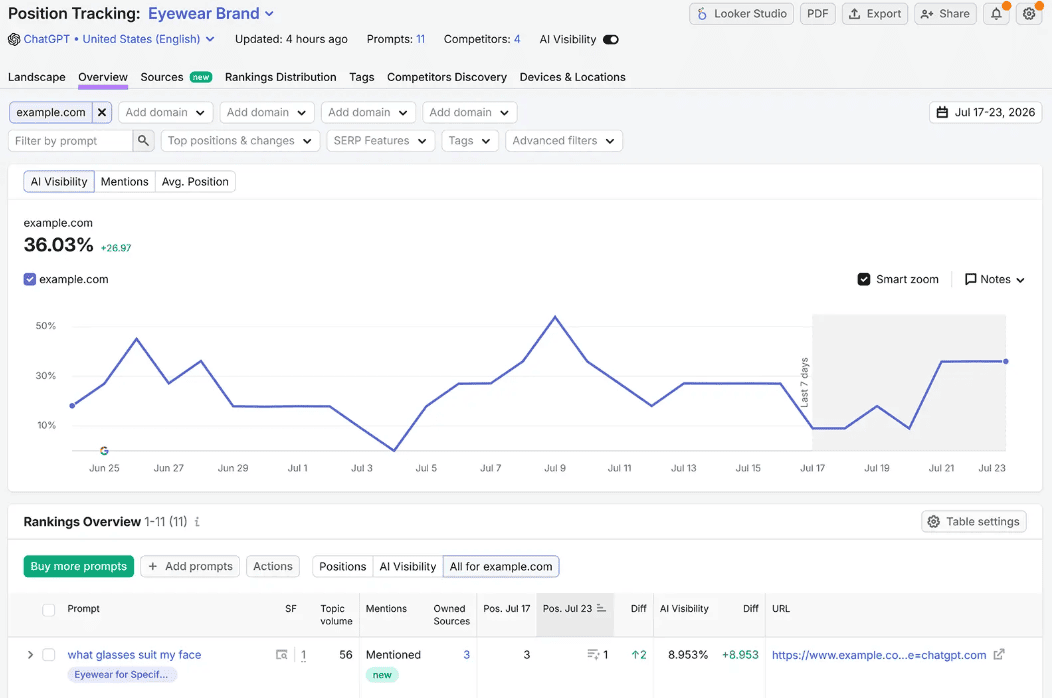
Built on a database of more than 317 million prompts, the Semrush AI Visibility Toolkit doubles as a research and monitoring product. Law firms typically use it to spot rising legal search topics and learn what shapes their presence in AI answers.
Key GEO features for law firms:
- Estimates AI search volume for legal topics.
- Rates how hard it is to appear for a given topic.
- Sorts legal queries by search intent.
- Allows you to verify whether AI crawlers can access your website.
- Tracks standard organic Google search rankings alongside AI positions.
Pricing: $99/month per domain on annual billing, which includes 25 tracked prompts.
Pros:
- 300 AI Analysis reports are included each day.
- Up to 10 CSV exports are allowed daily.
- Historical data supports before-and-after comparisons.
Cons:
- The standalone toolkit has no free trial.
- Extra prompt capacity costs $60/month for 50 prompts, so bills can climb.
- Engine coverage is narrower than several Semrush AI visibility toolkit alternatives we have covered in this guide.
- Brand performance reports can read as broad instead of granular GEO recommendations, which tell you what to improve or focus on this afternoon.
What real users say: Reviewers value the depth of research and reporting. They also mention usage caps and a learning curve.
Best suited for: Marketing teams that already run legal SEO in Semrush and want AI search data in the same workflow.
Also read: MentionBird vs Semrush AI Visibility Toolkit
4. Profound
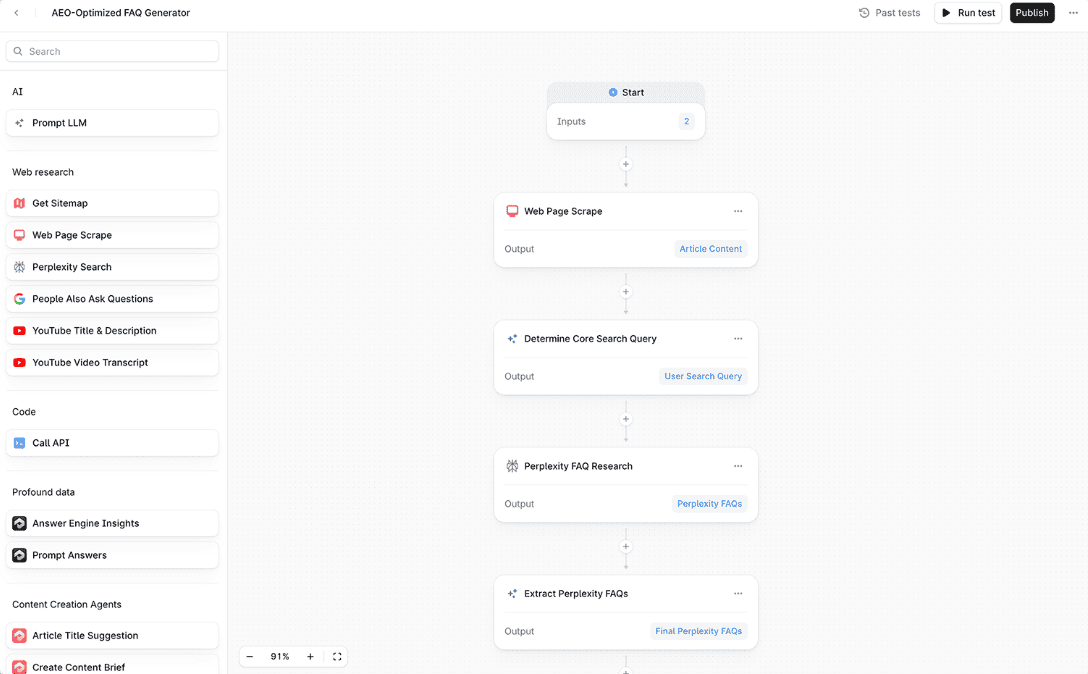
Profound is a GEO platform that targets the enterprise end of generative engine optimization for law firms. It pairs AI search intelligence with agents that automate research and content production, which generally appeals to firms publishing at high volume.
Key GEO features for law firms:
- Drafts legal FAQs and content briefs through AI agents.
- Keeps firm-specific guidelines in Context Manager.
- Handles bulk marketing tasks in Profound Sheets.
- Tracks AI crawler visits and referral traffic.
- Breaks down the AI-generated searches behind legal questions.
- Gauges demand for legal topics with Prompt Volumes.
Pricing: Profound offers a free seven-day trial with 50 daily prompts across ChatGPT, Gemini, and Google AI Overviews. Enterprise pricing is custom and includes tailored tracking limits, expanded platform coverage, and dedicated support.
Pros:
- Team seats are unlimited.
- SSO/SAML and SOC 2 compliance help firms that handle confidential client data pass IT reviews.
Cons:
- No public rate card exists, and reviewers often call the product expensive compared to other Profound alternatives mentioned in the blog.
- The feature set may be more than small and midsize firms need.
What real users say: Profound holds 4.6/5 on G2. Reviewers praise the integrations and onboarding help, though some find the advanced features hard to learn.
Best suited for: Enterprise legal marketing departments and the agencies that serve them.
Also read: MentionBird vs Profound
5. GeoReputation
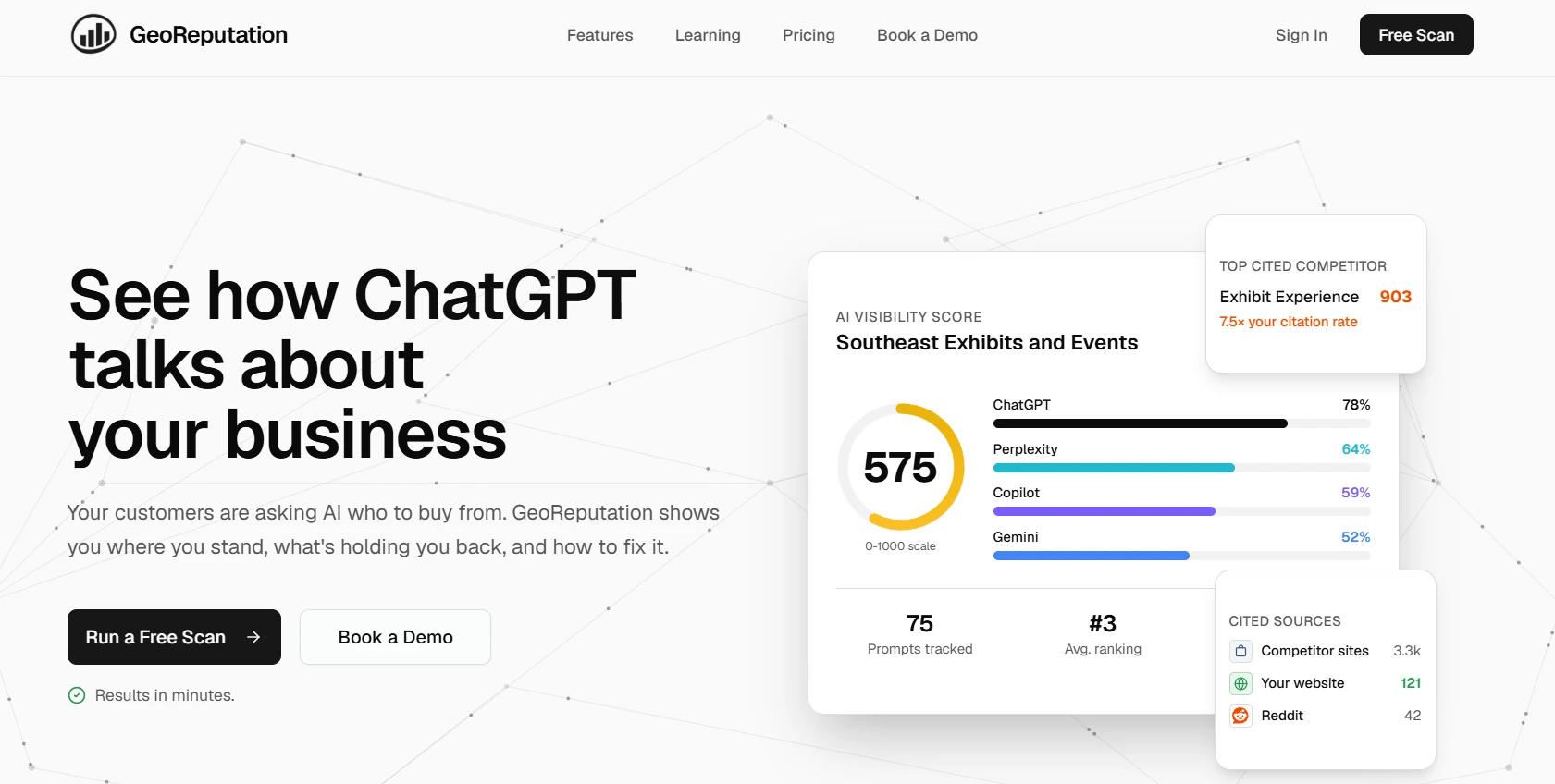
GeoReputation takes a measurement-focused approach to GEO. Rather than relying on a single AI response, it tests each query multiple times to account for changing recommendations. Law firms can use these results to establish a more reliable baseline before evaluating their marketing efforts.
Key GEO features for law firms:
- Calculates a 0–1,000 AI Visibility Score.
- Runs each legal prompt three times to share reliable tracking data.
- Groups visibility scores into six performance tiers.
- Weighs mention frequency and recommendation prominence.
- Measures campaign impact after 30 days.
Pricing: GeoReputation offers a free scan with six prompts. Monitor costs $199/month for 100 prompts, while Optimize costs $499/month for 350 prompts and additional audit capabilities.
Pros:
- Records responses from the consumer-facing interface side that actual users use and not via APIs.
- Offers campaign outcome tracking on Optimize.
Cons:
- The default setup covers three AI surfaces, and full five-engine coverage requires the higher Optimize plan.
- Scans run weekly unless you pay extra for daily monitoring.
What real users say: Independent user reviews are currently too limited to establish reliable feedback about GeoReputation.
Best suited for: Solo attorneys and small law firms with limited marketing staff who prefer a structured, self-service GEO monitoring tool.
6. Peec AI
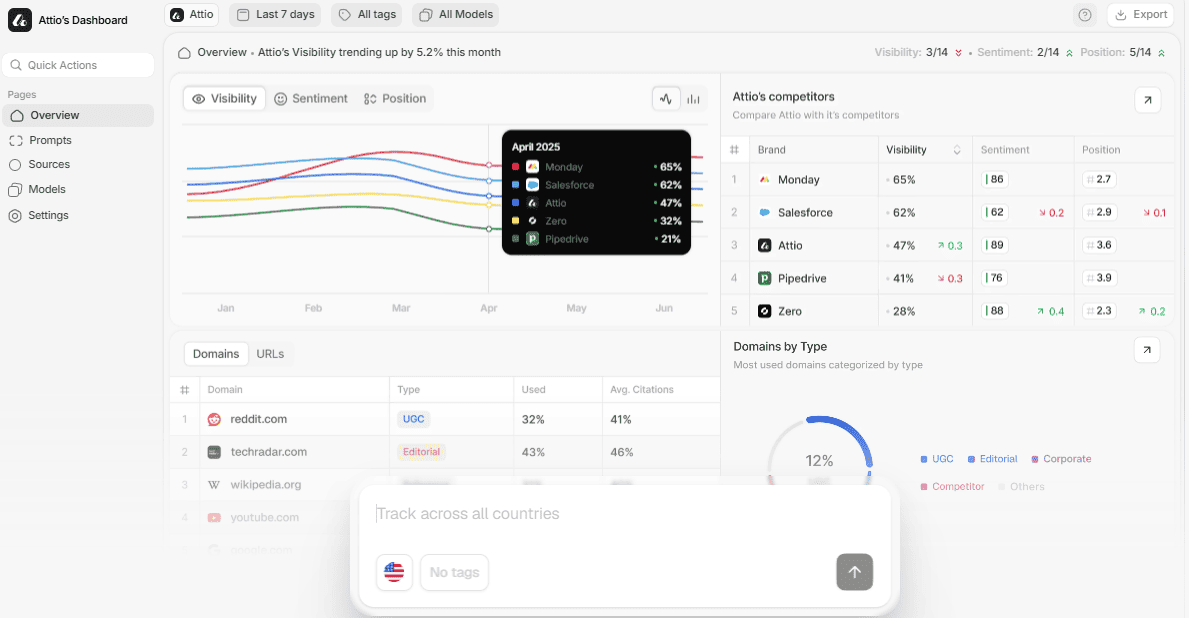
Next in our list of best GEO tools for law firms is Peec AI. It helps law firms clearly understand how AI platforms perceive and present their brand to prospective clients by tracking and reporting brand sentiment, visibility, and positioning in AI-generated answers.
Key GEO features for law firms:
- Suggests relevant prompts based on your firm's website.
- Automatically detects frequently mentioned competing law firms.
- Compares what AI says about your firm against the facts you provide, and highlights contradicting claims first.
- Reveals which social media platforms and posts AI uses as sources, and how your channels compare with rival firms.
- Identifies sponsored placements appearing alongside AI answers.
- Allows you to build custom dashboards with selected metrics and charts.
Pricing: Starter costs $95/month for 50 prompts, one project, and one country. Pro costs $245/month for 150 prompts and two projects.
Pros:
- Unlimited users are included, even on Starter.
- The interface is relatively easy for beginners to navigate.
Cons:
- Starter supports only one project and one country.
- Each additional AI model costs $35/month on Starter, $85/month on Pro, and $165/month on Advanced.
- Recommendations in Actions are grouped by similar types of URLs, so you do not get separate guidance for each topic or prompt, unlike some Peec AI alternatives.
What real users say: Peec AI holds 4.7/5 on G2. Reviewers appreciate its quick setup, but some report overlapping automatically suggested prompts and crowded navigation menus.
Best suited for: Large full-service legal firms that need to watch positioning across many practice groups.
Also read: MentionBird vs Peec AI
7. BrightLocal
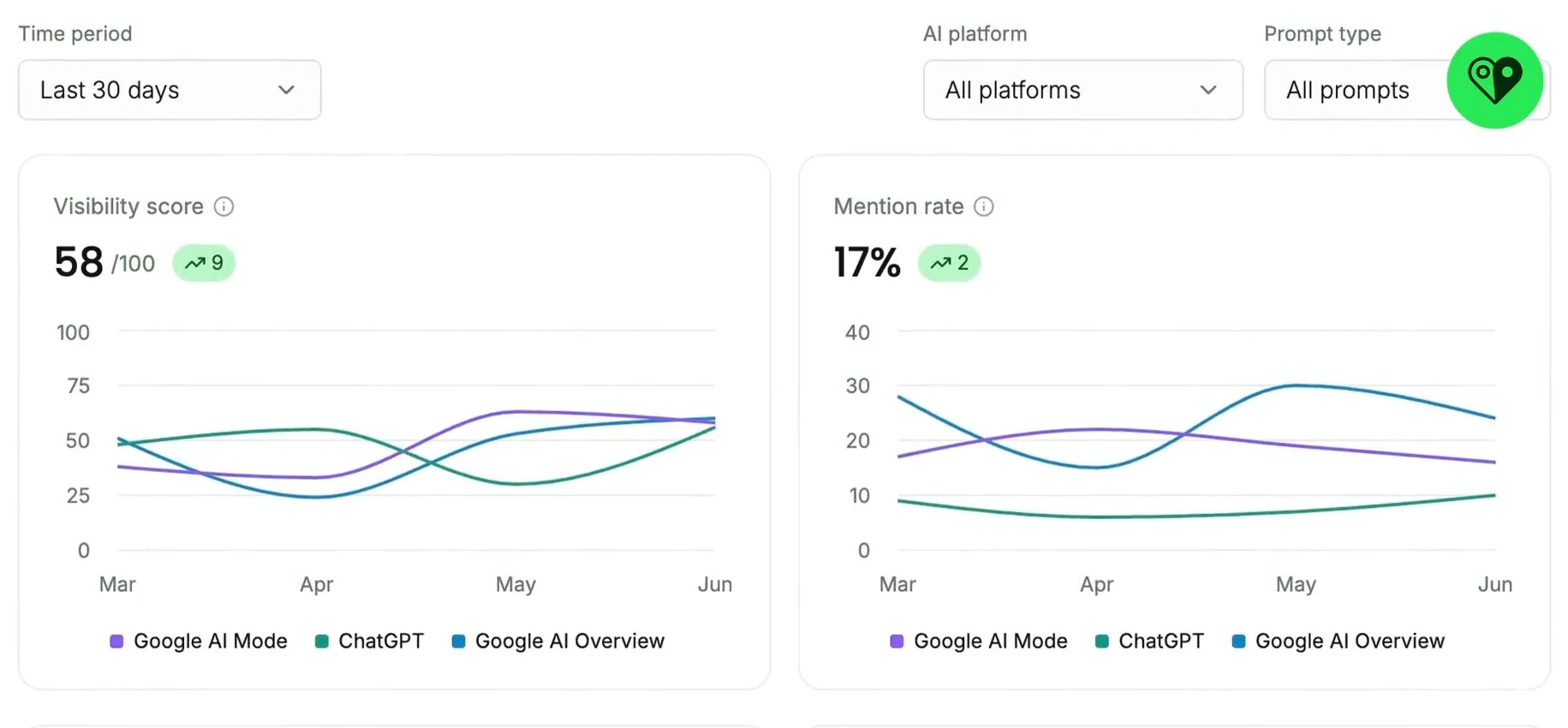
BrightLocal started as a local SEO tool and now includes a Local AI Visibility Tracker in every plan, so law firms can monitor AI search without a separate GEO subscription.
Key GEO features for law firms:
- Ties each prompt to one office address instead of the firm’s brand name.
- Shows which directories AI relies on when your firm has no profile, and lets you order those listings through Citation Builder.
- Submits firm details to five data aggregators, including Data Axle and Foursquare.
- Keeps name, address, and phone details consistent across key sites with Active Sync, since conflicting details can lead AI to share outdated information about your firm.
- Schedules Google Business Profile posts for one or several offices.
- Sends review requests to clients by email or SMS, or collects them in the office, which builds the fresh reviews AI answers often draw on.
Pricing: Track is $41/month, Manage is $54/month, and Grow is $65/month for one location, with 25% off on annual billing. Citation Builder orders are charged separately ($2 per listing).
Pros:
- With plans ranging from $41 to $65, it is one of the most affordable GEO tools for law firms in this guide.
- Firms can monitor, request, and respond to client reviews in one place, helping protect their online reputation.
Cons:
- Perplexity, Gemini, and Claude are not yet supported on the platform for AI search visibility tracking.
- Some of the platform’s core capabilities, such as rank tracking and audits, are only supported in the USA, the UK, Canada, and Australia.
What real users say: BrightLocal holds 4.8/5 on Capterra, based on 280+ reviews. Most users share a positive experience with the tool, while some also report difficulties managing large numbers of locations within one account.
Best suited for: Law firms with dedicated administrative staff responsible for keeping attorney profiles, business listings, and practice information accurate across online directories.
8. Otterly AI
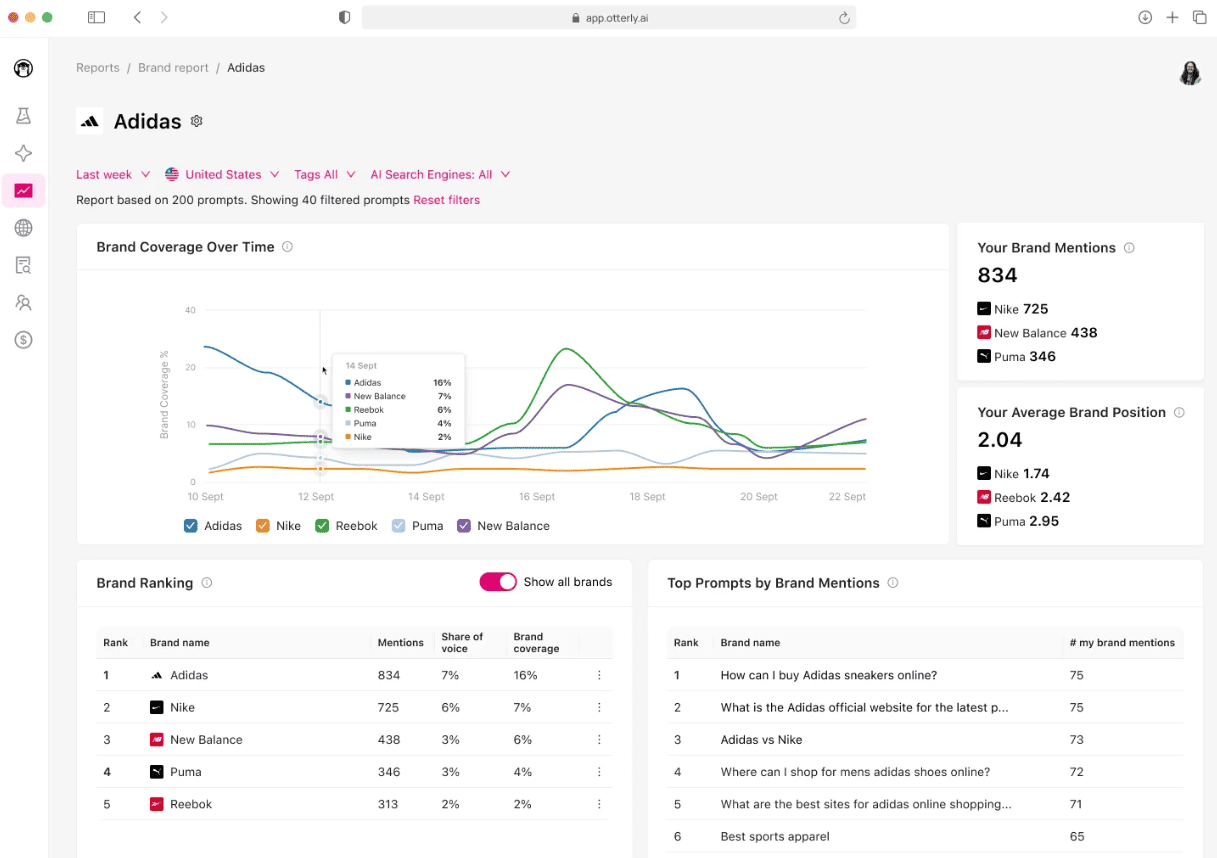
OtterlyAI offers a relatively affordable starting point for law firms exploring GEO. Its flexible monitoring plans let users choose which AI search engines matter most, rather than paying for a fixed selection.
Key GEO features for law firms:
- Converts legal keywords into conversational search prompts.
- Checks whether practice-area pages are AI-ready.
- Expands legal questions into related queries through Query Fan-Out.
- Groups prompts into rising and declining performance trends.
- Sends AI search data to Looker Studio, where it can sit beside your other marketing reports.
Pricing: Lite costs $29/month, Standard $189/month, and Premium $489/month. Lite includes 2,000 monthly prompt credits, supporting approximately 20 prompts across three AI engines. A 7-day free trial is available.
Pros:
- Unlimited brand reports and GEO audits are included on Lite.
- Users can change their selected AI engines without upgrading.
Cons:
- Lite supports only one workspace and 3 AEO and GEO recommendations, and you don’t get any credit top-ups, which can feel restrictive compared to other Otterly AI alternatives.
- Users report that data population can take time inside the tool.
What real users say: OtterlyAI holds 4.7/5 on G2. Users appreciate its prompt research capabilities, while some request more detailed historical reporting. Others report that sentiment analysis occasionally classifies neutral mentions as negative.
Best suited for: Solo legal marketers and small law firm marketing departments experimenting with GEO before expanding their monitoring budgets.
Also read: MentionBird vs Otterly AI
9. Surfer
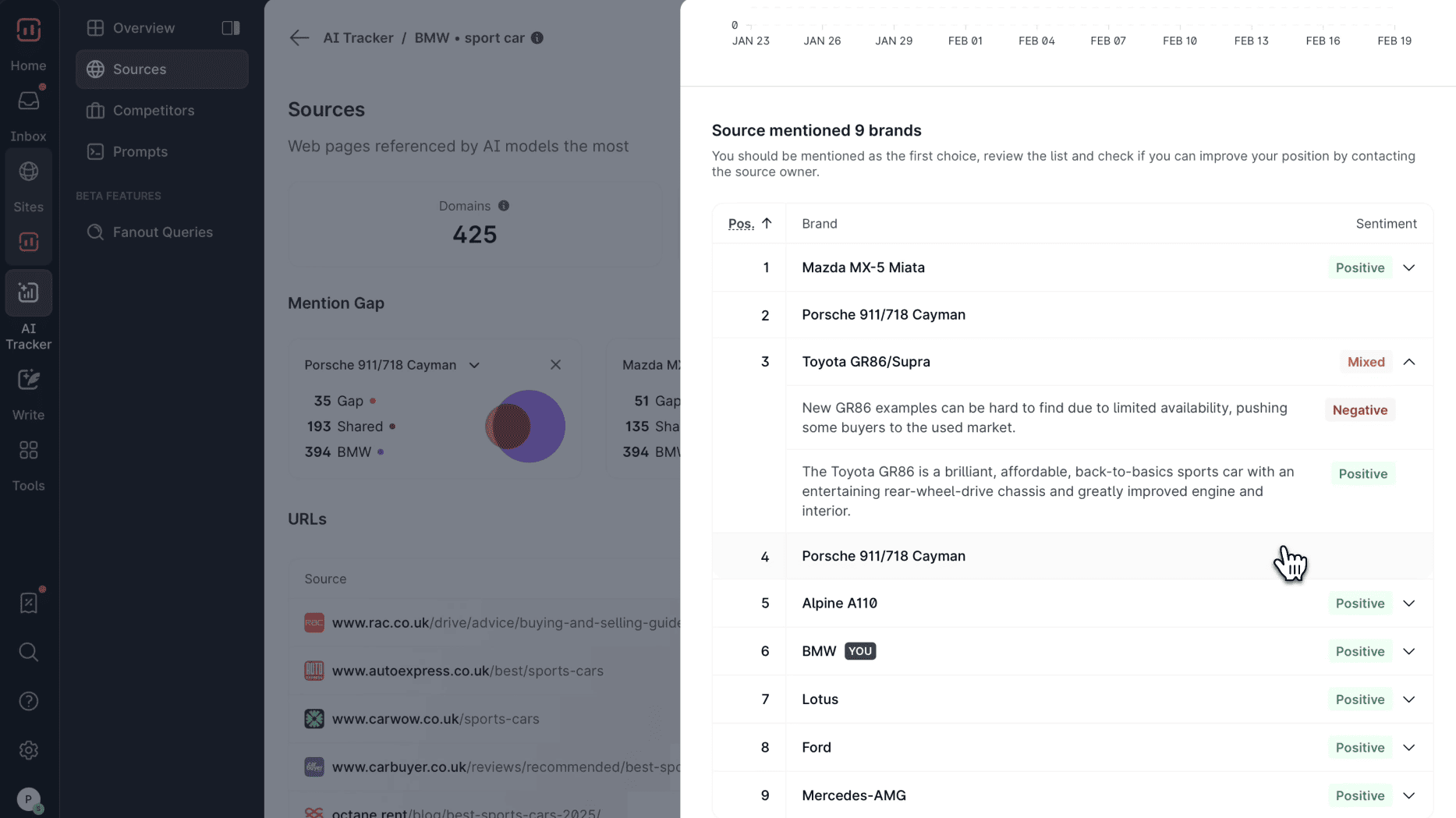
Surfer approaches GEO from the writing desk. It is a content optimization platform that grades drafts for both search engines and LLMs, which helps firms that publish practice area guides regularly.
Key GEO features for law firms:
- Evaluates whether each article answers the legal question in its opening lines, which typically makes it easier for AI to quote.
- Identifies facts that competing pages include but your practice area guides omit.
- Adds relevant NLP terms to the existing sections of a draft through automatic optimization.
- Recommends internal links between related legal pages, such as a practice area page and its supporting guides.
- Maps topic clusters so you can plan full coverage of a practice area.
Pricing: The AI Search Analytics plan starts at $95/month, with other higher tiers available from $119/mo to $359/mo.
Pros:
- A seven-day free trial is available.
- Google Docs and WordPress integrations simplify publishing of SEO and GEO-rich content.
Cons:
- Compared to other AI SEO tools in the blog, it lacks an extensive keyword and backlink database.
- Tracking stops at five platforms, so assistants such as Claude and Grok go unmeasured.
What real users say: Surfer users on G2 appreciate Content Editor's suggestions for improving keyword placement and content structure. However, some warn that following every recommendation can make articles sound repetitive or overoptimized.
Best suited for: Legal content teams and the writers responsible for AI SEO.
10. Yext Scout
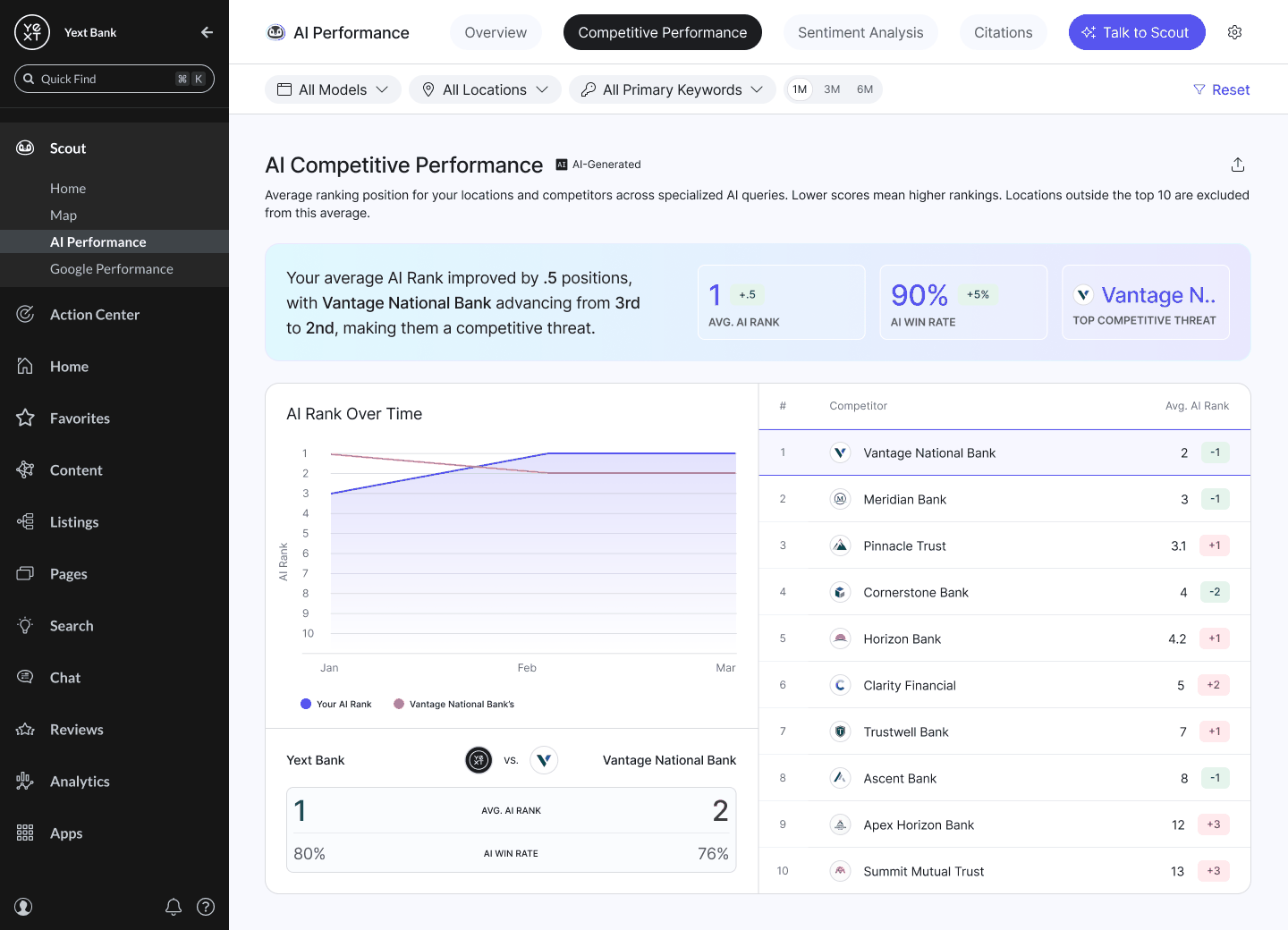
Yext Scout is the AI search visibility agent inside Yext’s digital presence platform, and it compares each location with up to 20 competitors per scan.
Key GEO features for law firms:
- Tracks head-to-head win rates against the law firms closest to each office.
- Separates brand-level prompts from high-intent local searches.
- Surfaces recurring themes in how AI describes your firm, such as slow response times, so you can address the cause and change the narrative.
- Identifies offices with a declining win rate and prioritizes the fixes for each one.
- Lets agents correct business information and reply to reviews while your team stays in control.
Pricing: Scout is sold through Yext’s sales team, with no published price.
Pros:
- Benchmarks draw on data from more than 12 million locations.
- Combines rank, AI citations, review counts, and profile completeness into a centralized command dashboard (including map and hexagon-based regional views).
Cons:
- Much of its value typically depends on using other Yext products, such as Listings and Pages.
- Automated review replies and listing edits need human sign-off to stay within bar advertising rules.
What real users say: Yext's broader platform has a 4.4/5 rating on G2. However, independent Scout-specific feedback remains limited, making its GEO capabilities harder to assess through customer reviews alone.
Best suited for: National and multi-state firms with dozens of offices, particularly those that already manage listings in Yext.
Best Free GEO Tools for Law Firms
Not ready to pay yet? These free GEO tools for law firms stay free indefinitely, each with caps on tracking or reporting:
- Siftly: Ten prompts and 100 responses a month, refreshed weekly, with competitor tracking and 30 days of history.
- AEOmeter: One brand across four engines, plus a 30-day history. Checks run in Chrome through your own signed-in AI accounts.
- Citegram: One prompt on one assistant of your choice, three competitors, and seven days of history. You start each run manually.
Which GEO Tools for Legal Businesses Did Not Make This List?
Several well-known software apps are worth a look, yet each missed this list of the best GEO tools for law firms for several key reasons:
- Ahrefs Brand Radar: Its AI chatbot indexes generally refresh monthly, and it reports visibility without offering specific GEO recommendations. If actionable guidance matters more, consider these Ahrefs Brand Radar alternatives.
- Scrunch AI: Core starts at $250/month, and its Agent Traffic feature depends on CDN or hosting integrations. These requirements may not suit smaller law firm websites, making other Scrunch AI alternatives worth exploring.
- HubSpot AEO: Covers only ChatGPT, Gemini, and Perplexity by default. Claude and Google AI search features need beta access and extra usage capacity.
Also read: MentionBird vs Ahrefs Brand Radar
How to Choose the Right GEO Tool As a Lawyer
Start with your firm's situation, then match a GEO tool for lawyers to it. These checks help narrow the field:

- Where your clients ask: Confirm the tool tracks the platforms your prospects use, whether that is Google, ChatGPT, or Grok on X.
- Setup effort: Favor a software app your team can configure without a developer and that includes guided onboarding.
- Support quality: Look for a vendor that resolves technical questions quickly.
- Peer feedback: Read G2 and similar review sites for honest accounts of reliability and usability.
- Headroom: Check that adding practice areas, users, and campaigns will not force a platform switch later.
Final Thoughts on the Best GEO Tools for Law Firms
People increasingly ask AI assistants about legal problems and attorneys before they call a firm. That shift makes it worth measuring law firm AI search visibility, so you know what those assistants say about your practice.
GEO does not replace traditional SEO, though. The two work together, and both generally reward accurate content, complete directory profiles, and a solid reputation. Pick a tool that matches your budget and geography, track a focused set of prompts, and act on what the data shows.
Also read: Our roundup of the best AEO tools for law firms.
FAQs
1. Can ChatGPT recommend my law firm to someone who needs a lawyer?
Yes. ChatGPT can name attorneys based on what it learned in training or on sources it retrieves through web search. Whether your firm appears depends on how the question is worded, what information exists about you, and whether a web search runs.
2. What is the best GEO tool to track whether AI recommends my law firm?
MentionBird is a strong option for tracking ChatGPT brand mentions and recommendations. It monitors the prompts you choose, records where your firm ranks in each answer, and suggests ways to improve. Profound and Peec AI are also worth considering.
3. How long does GEO take to show results for law firms?
No fixed timeline exists. Some content updates may influence AI answers within weeks, while others take longer because each platform refreshes its information on its own schedule.
4. Can I pay ChatGPT or other AI platforms to recommend my firm?
No. Organic recommendations cannot be bought. Some platforms sell advertising, but those paid placements sit apart from organic AI answers.
5. Do law firms need a different GEO strategy for each practice area?
Not entirely. The core method stays the same, but content should reflect the questions, terminology, and worries tied to each practice area. Personal injury and immigration clients, for instance, usually look for different information.
6. How can I tell whether AI search sends clients to my website?
To check AI referral traffic, open Traffic acquisition in GA4, switch to Session source/medium, and filter for referrers like chatgpt.com or perplexity.ai. Then match those sessions to consultation requests. Some visits appear as direct traffic, so attribution stays approximate.
7. Can GEO help a new law firm compete with established practices?
It can, though nothing is guaranteed. A newer firm can publish accurate, useful content on legal questions that bigger firms overlook. Credibility signals and relevant third-party references may also raise its odds of appearing in AI answers.
8. Is GEO the same as local SEO for law firms?
No. Local SEO targets map results and local organic listings, while GEO targets the answers AI systems generate. The signals overlap, however: reviews, consistent directory listings, and clear practice area pages typically help with both.

See which legal questions AI answers without naming your firm, and what to do next.
First month $19 with code TRY19, then $79/mo. Cancel anytime.