Best AI SEO Tools in 2026: 11 Platforms Compared
- AI SEO tools improve content, technical SEO, research, and brand visibility across traditional search and AI answers.
- MentionBird suits teams seeking daily AI tracking and prompt-specific actions for earning more mentions and citations.
- Semrush One combines SEO and AI search workflows. Surfer focuses on content optimization, while Ahrefs excels at backlink research.
- Choose a tool based on your primary goal, platform coverage, integrations, controls, and total cost.
- Prioritize commercial opportunities, analyze competitor visibility, verify AI outputs, and review results after at least six weeks.
Looking for the best AI SEO tools? The strongest options today are MentionBird, Profound, Semrush One, Ahrefs, and Surfer. MentionBird tracks your brand’s presence across multiple LLMs and recommends next marketing steps to improve your share of voice. Semrush One combines traditional SEO with AI search data. Ahrefs offers strong backlink research alongside Brand Radar’s index of 542 million prompts. Surfer helps you optimize content for search intent.
While these five tools stand out for their capabilities, they aren't your only options. Six other platforms also offer useful features for different workflows and budgets. Below, we compare all 11 tools by their features, pricing, pros, cons, and team fit to help you choose the right platform.
How Did We Select These AI SEO Tools?
We used the following criteria to shortlist the best AI SEO tools in this guide:
- AI platform coverage: The tool should cover all the key AI platforms your buyers might use, such as ChatGPT, Gemini, etc.
- Frequency of Tracking: The best AI SEO tracking software should monitor prompts regularly enough to help brands identify visibility changes.
- Allowances at the entry price: Prompts, keywords, seats, and domains included before add-ons start moving the bill.
- What happens after the report: Whether a tool stops at giving you performance scores or names the page to fix and the source to chase for building backlinks was also taken into consideration.
- AEO+SEO help: Does the tool and its suggestions help with boosting both your brand’s AEO and SEO performance?
- Setup effort: We assessed how quickly users can get started, including whether the tool offers self-service onboarding or requires a demo.
Side-by-Side AI SEO Tools Comparison
| Tool | Main strength | AI platforms tracked | Integrations | Starting price |
|---|---|---|---|---|
| MentionBird | Prompt-level ranking advice based on actual answers, citations, and competitor AI visibility | 20: ChatGPT, Google Gemini, Perplexity, Claude, Grok, Google AI Overviews, Microsoft Copilot, DeepSeek, Google AI Mode, Mistral Vibe, Qwen Chat, Meta AI, Kimi AI, You.com, Ask Brave, Alexa for Shopping, Doubao, ERNIE, Poe, Duck.ai. | n8n, Looker Studio, Claude, ChatGPT, API, etc. | $79/month |
| Semrush One | Connected SEO and AI search workflows | 5: Google AI Overviews, AI Mode, ChatGPT, Perplexity, Gemini | Google Analytics, Google Search Console, Looker Studio, Zapier, n8n | $199/month |
| Profound | Enterprise-grade visibility measurement with crawler, attribution, and governance data | 9 on Enterprise: ChatGPT, Perplexity, Google AI Mode, Gemini, Muse Spark, DeepSeek, Claude, Google AI Overviews, Exa Search | Google Analytics, Cloudflare, Akamai, Vercel, WordPress, etc. | Custom Enterprise pricing; free 7-day trial |
| Ahrefs | Backlink research and search-backed AI prompt data | 6: Google AI Overviews, AI Mode, ChatGPT, Copilot, Gemini, Perplexity | Google Search Console, Looker Studio, Claude, ChatGPT, API, etc. | Starter $29 without AI tracking; Lite $129 with 150 monthly prompt checks |
| Surfer | Live content optimization and AI visibility guidance | 5: ChatGPT, Perplexity, Google AI Mode, Google AI Overviews, Gemini | WordPress, Contentful, etc. | AI Search Analytics $95/month; content plans from $59/month |
| SE Ranking | Agency-friendly SEO and GEO campaign management | 5: Google AI Overviews, AI Mode, ChatGPT, Gemini, Perplexity | Data Studio, Matomo, Search Console, etc. | $129/month |
| Writesonic | Content production, optimization, and AI visibility tracking | 8 on Enterprise: ChatGPT, Gemini, Google AI Overviews, Google AI Mode, Perplexity, Claude, Grok, Copilot | Google Search Console, WordPress, Google Analytics, Looker Studio | $99/month |
| Ubersuggest | Affordable keyword research, audits, and tracking | ChatGPT and Gemini; Google AI Overviews on custom plans | Google Analytics, Google Search Console | $29/month |
| Frase | Content decay monitoring and AI citation analysis | 6: ChatGPT, Google AI, Perplexity, Claude, Gemini | WordPress, Webflow, Sanity, Wix, Notion, Slack, etc. | $49/month |
| Search Atlas | AI-powered SEO automation for technical and on-page improvements | 6 currently documented: ChatGPT, Gemini, Google AI Mode, Copilot, Perplexity, and Claude. | Drupal, HubSpot, etc. | $99/month; AI visibility from $199/month |
| NEURONwriter | Semantic content optimization with integrated AI visibility monitoring | 4 with Advanced add-on: Google AI Overviews, AI Mode, ChatGPT, Perplexity | WordPress, Google Search Console, Google Docs, Zapier, API | $23/month |
11 Best AI SEO Tools for 2026
Let’s quickly deep dive into the list now.
1. MentionBird
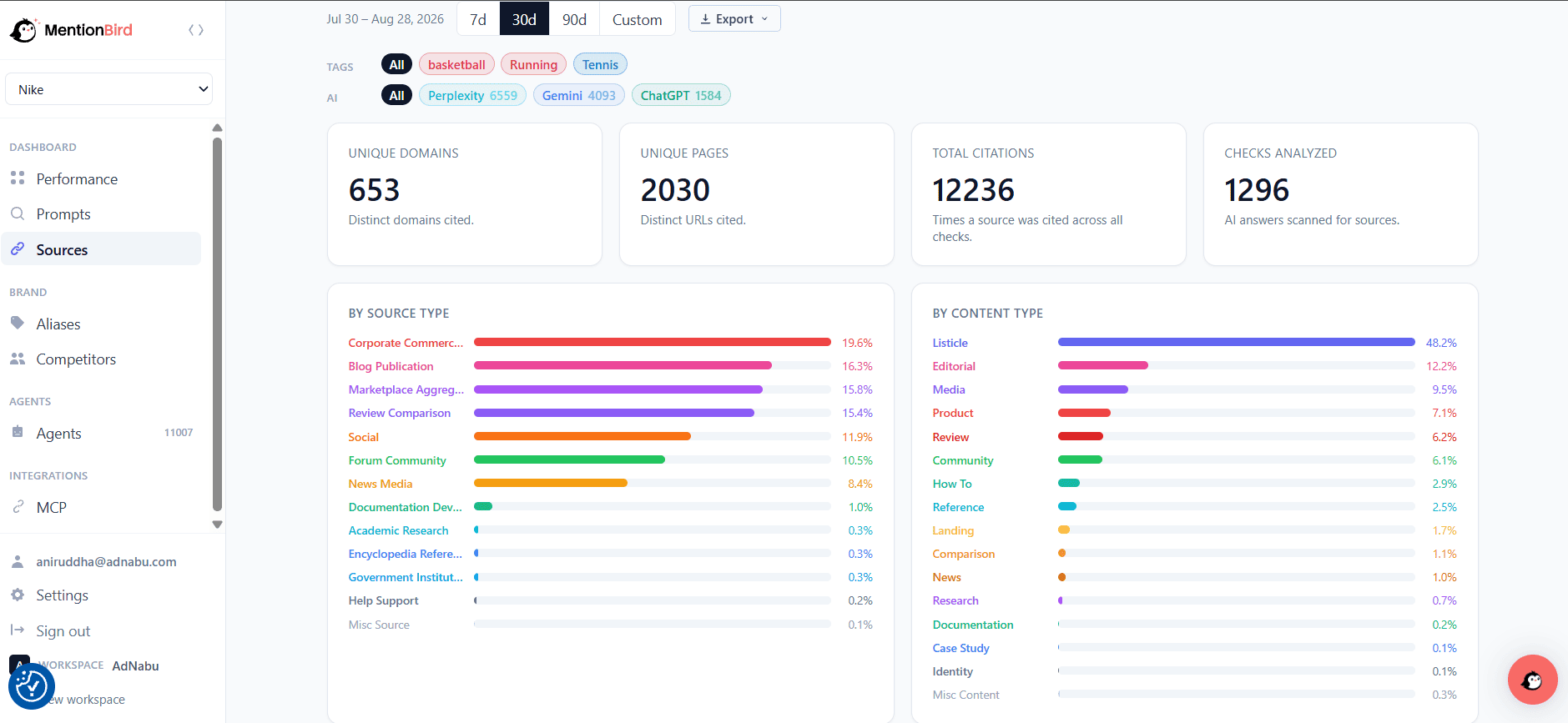
MentionBird is an AI SEO tool platform. It shows where your brand appears in AI answers and gives a clear plan to win more citations and mentions, which can also help you improve your brand’s SEO performance.
Key features:
- On-page, off-page, and technical AEO and SEO suggestions per prompt
- Shows mentions, rankings, citations, and share-of-voice changes
- Explains source types, formats, and domain authority
- Country targeting across 50+ regions and competitor benchmarking included
- Gives access to the keywords AI engines use to generate responses to user queries
Pricing: Starter costs $79 monthly for 100 daily prompt runs. Growth is $299 for 400. Custom covers tracking across all 20 AI platforms and offers unlimited prompt tracking.
Pros:
- AI SEO recommendations are available on all plans
- It extends analysis to video and forum spaces (YouTube, TikTok, and Reddit) that heavily influence LLM training data.
- The entry plan includes ten team member seats, making accessibility and collaboration easier for big teams
- You can easily split prompt runs across your desired platforms
- With support for 20 platforms, it offers one of the broadest AI search visibility tracking in this list of the best AI SEO tools
Cons:
- No free plan or conventional trial
Best suited for:
- Agencies, AEO teams, and brands across any industry, such as SaaS, e-commerce, healthcare, local services, etc.
Also read: Best AEO tools compared
2. Semrush One
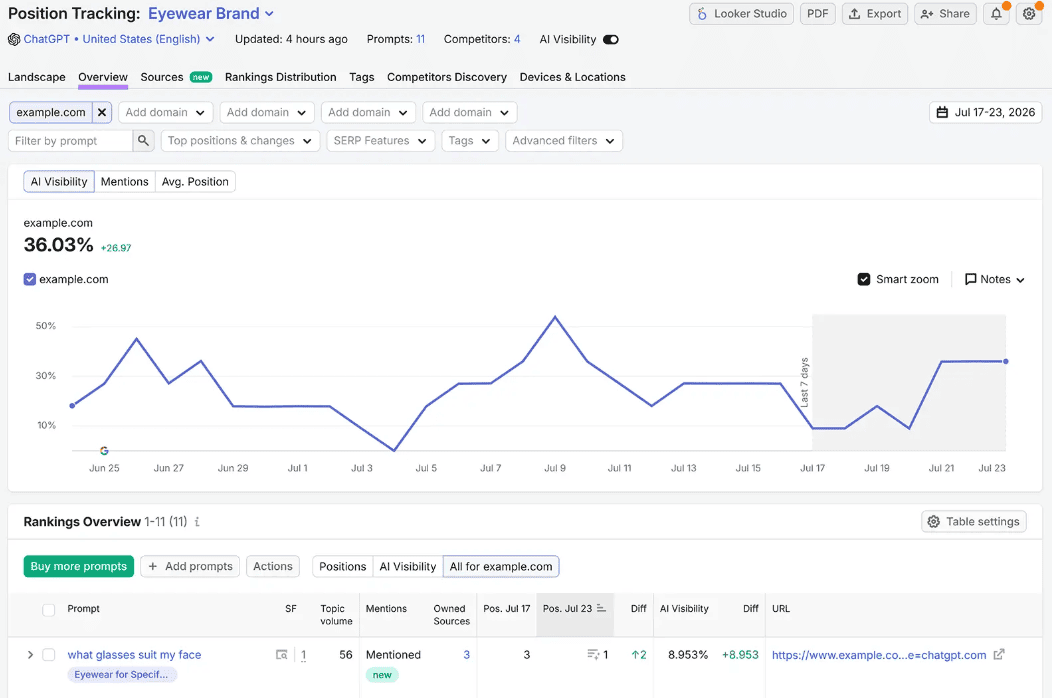
Semrush One bundles the classic Semrush SEO toolkit with its AI Visibility Toolkit under one subscription, so keyword data and prompt data live in the same dashboard.
Key features:
- Research keyword volume, difficulty, and related search terms using Keyword Magic Tool.
- Detect crawlability issues, broken links, and technical SEO errors using Site Audit.
- Find websites linking to competitors but not your domain with Backlink Gap.
- Monitor Google keyword rankings across locations, devices, and SERP features through Position Tracking.
- Assess your website's readiness for AI search by checking technical accessibility and content structure.
Pricing: $199 buys the Starter bundle. Pro+ runs $299 and Advanced $549.
Pros:
- Tracks prompts across 220+ countries and territories for localized campaigns.
- 7-day trial allows you to use the tool fully before any commitment
Cons:
- Compared to other Semrush AI Visibility Toolkit alternatives, you don’t get AI visibility tracking and monitoring across Claude, Copilot, and other platforms
- Each additional user adds $45 monthly
Best suited for:
- In-house teams already running Semrush who want AI search data added
Also read: MentionBird vs. Semrush AI Visibility Toolkit
3. Profound
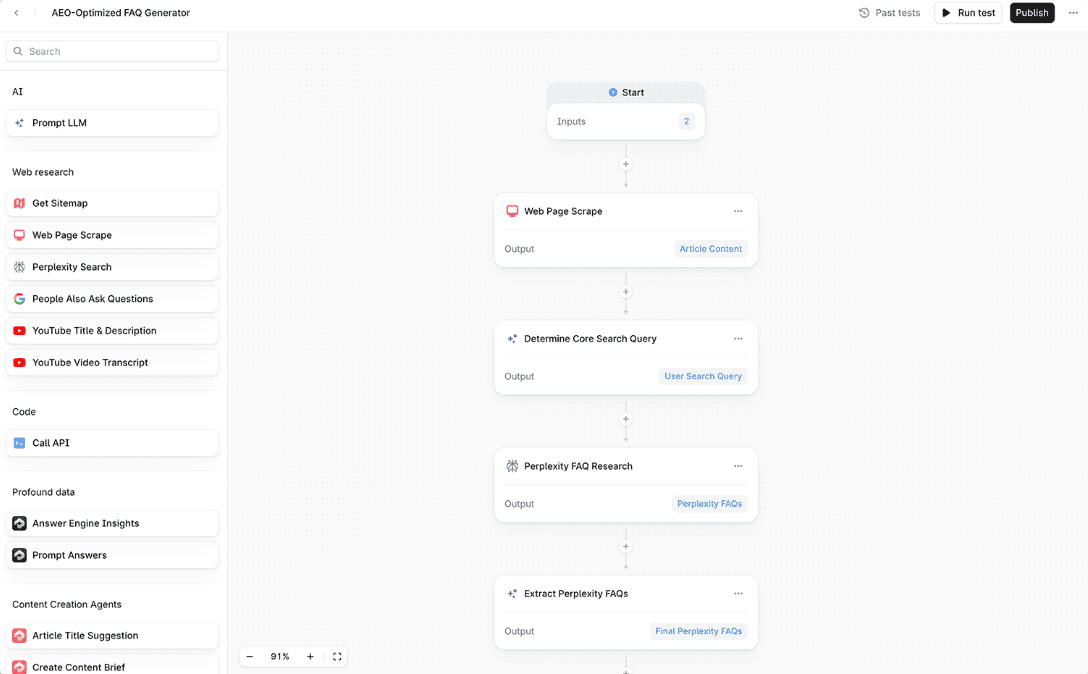
Profound is an AI search optimization tool that helps brands understand how AI platforms describe their products and influence purchasing decisions. It also offers AI marketing agents for research, content creation, and recurring marketing tasks.
Key features:
- Visibility, sentiment, citations, and competitor positioning
- Agent Analytics for AI crawler and traffic data
- ChatGPT Shopping and product placement tracking
- Regional and language performance comparisons
- SOC 2, SSO, and role-based access
Pricing: Profound offers a free 7-day trial with 50 daily prompts across three AI platforms. Enterprise pricing is custom.
Pros:
- Relies on massive datasets drawn from actual user conversations rather than synthetic keyword guesses.
- Rated 4.5 out of 5 across 1,000+ G2 reviews
Cons:
- Some teams can find its interface and data overwhelming to use
- GEO and SEO performance enhancement recommendations provided via the Aim agent sit behind Enterprise
- Compared to its other alternatives, Profound in general is very expensive and restrictive
Best suited for:
- Enterprise brands with dedicated budgets and strict oversight requirements
Also read:
4. Surfer
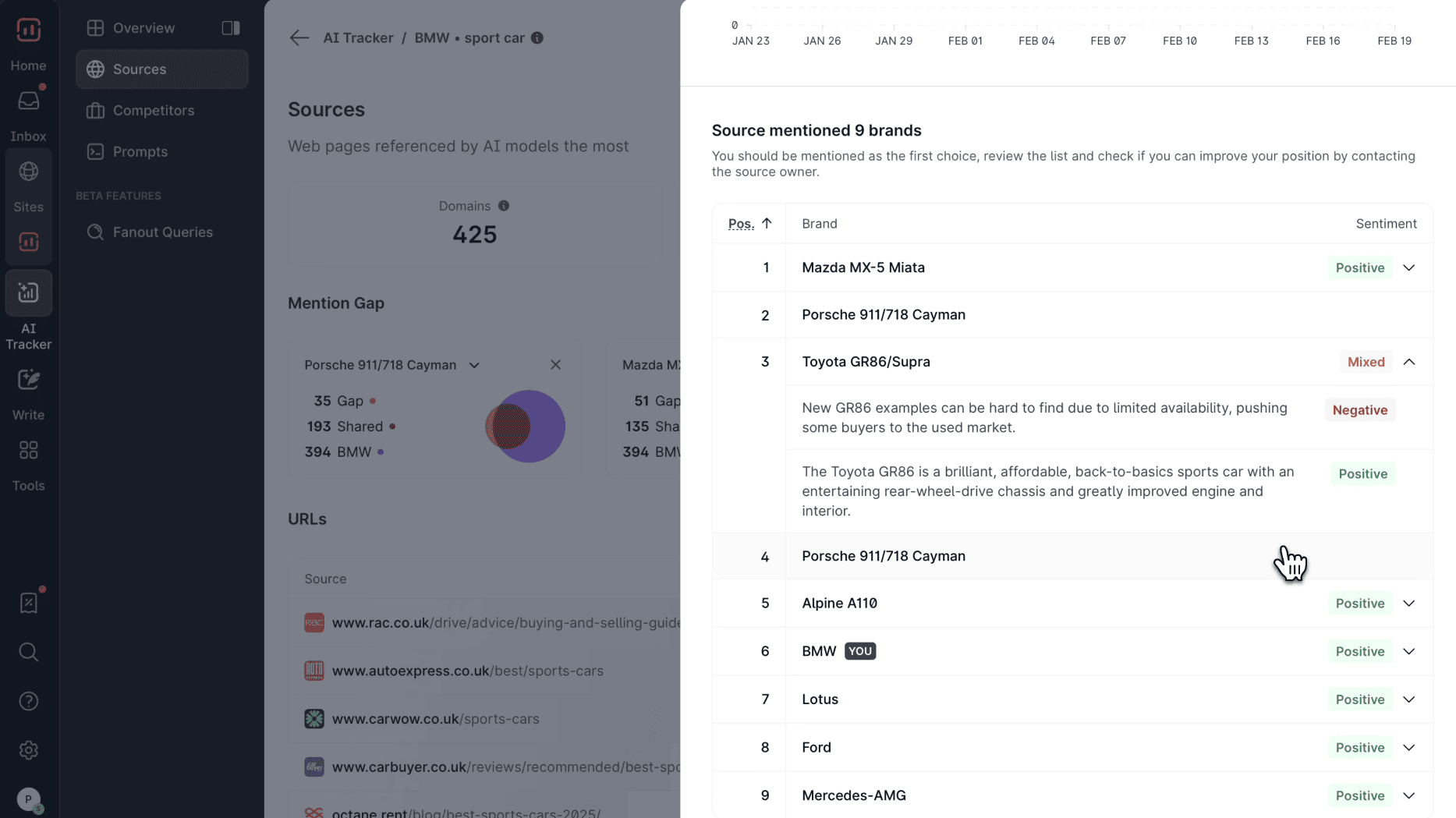
Surfer is one of the best AI SEO tools for content optimization. It compares your drafts with top-ranking pages and suggests improvements to increase your chances of being cited.
Key features:
- AI Search Guidelines structure content that answer engines cite
- Mention Gap surfaces prompts where competitors get quoted
- Topical Map plots clusters and flags cannibalization
- AI Tracker covers tracking across five answer engines
- Auto Optimize injects missing entities and factual references
Pricing: Discovery costs $59 monthly, Standard $119, Pro $219, Peace of Mind $359. Enterprise starts at $999.
Pros:
- Allows users to input brand guidelines so the AI maintains a consistent tone and accurately cites brand details rather than hallucinating.
- The learning curve of the platform is pretty low, and users appreciate that.
Cons:
- Standard refreshes prompt weekly, not daily
- No Claude, Copilot, Grok, or DeepSeek tracking
- AI writer output needs heavy editing
Best suited for:
- Content teams publishing ten or more articles monthly
- Writers and agencies wanting one editor for search and AI answers
5. Ahrefs
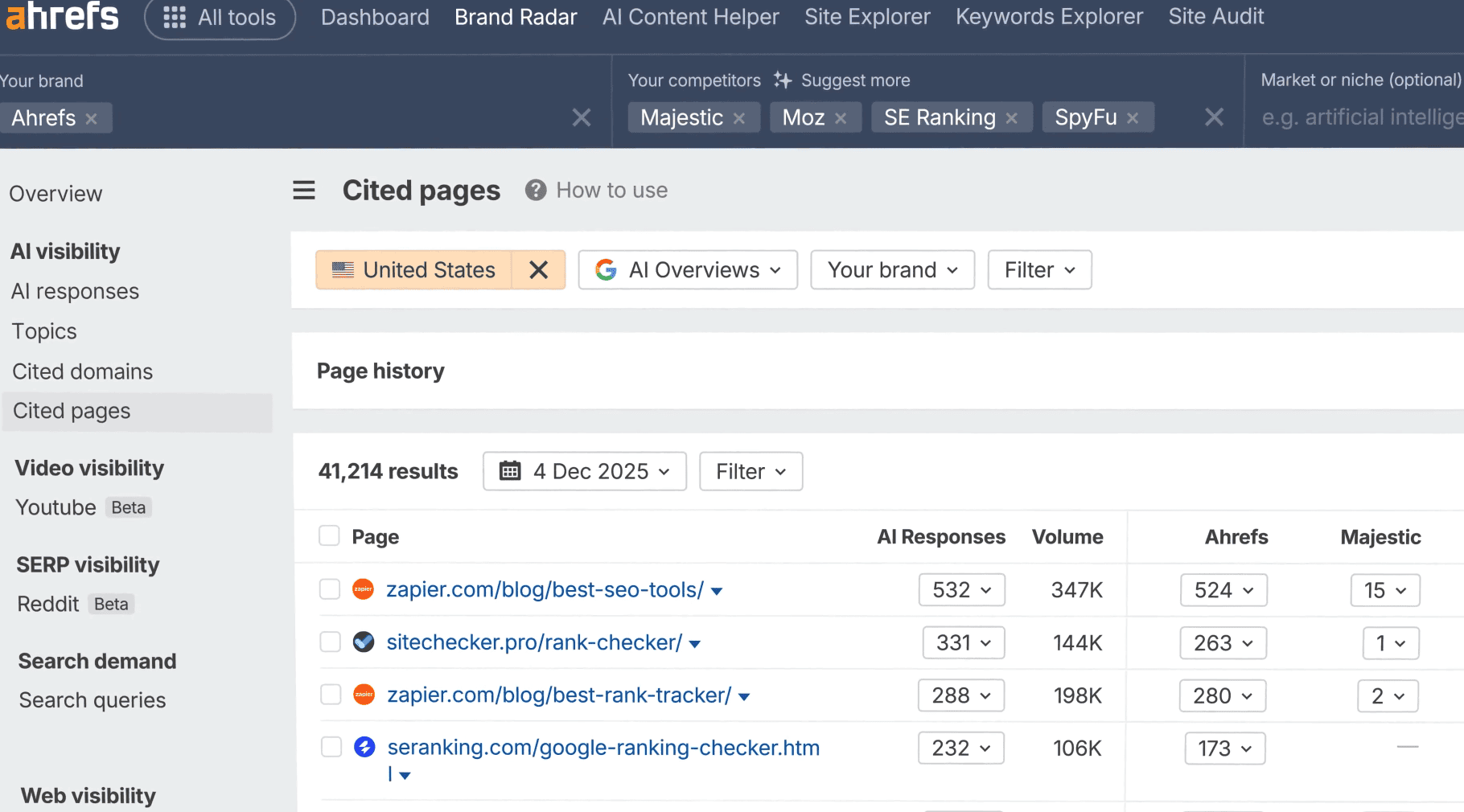
Ahrefs is an SEO suite known for the backlink and keyword data its own crawler collects. Its Brand Radar product adds AI visibility data in two parts. Custom Prompts tracks the exact buyer questions you define, as often as daily, while the AI Visibility Index lets you look up any brand across Ahrefs’ database of search-backed prompts with no setup.
Key features:
- Bot Analytics tracks AI crawler visits and identifies which website pages AI bots access.
- SERP Features report identifies keywords that trigger AI Overviews and other Google search features.
- Fanout Queries reveals related searches AI engines generate when answering questions.
- Entity Matching distinguishes brands and products with similar names for more accurate reporting.
- Top Pages shows how often individual website pages appear in AI responses.
Pricing: Starter costs $29 monthly. Lite costs $129 and includes 150 monthly prompt checks. Brand Radar costs $199 per platform or $699 for all platforms.
Pros:
- Ahrefs supports MCP integration, allowing LLMs (like Claude) to connect directly with your data.
- Brand Radar lets users explore historical AI visibility data without setting up prompts or waiting for new results.
- Users can research products, categories, and individual people, rather than limiting analysis to brand names.
Cons:
- Complete Brand Radar access costs $699 monthly
- Large chatbot indexes update monthly
- Ahrefs does not offer a conventional free trial
- Compared to other Ahrefs Brand Radar alternatives, it excels at analytics and showing visibility gaps, but lacks step-by-step optimization or direct content-fixing instructions.
Best suited for:
- Solo content marketers, SEO and digital marketing teams
Also read: MentionBird vs. Ahrefs Brand Radar
6. SE Ranking
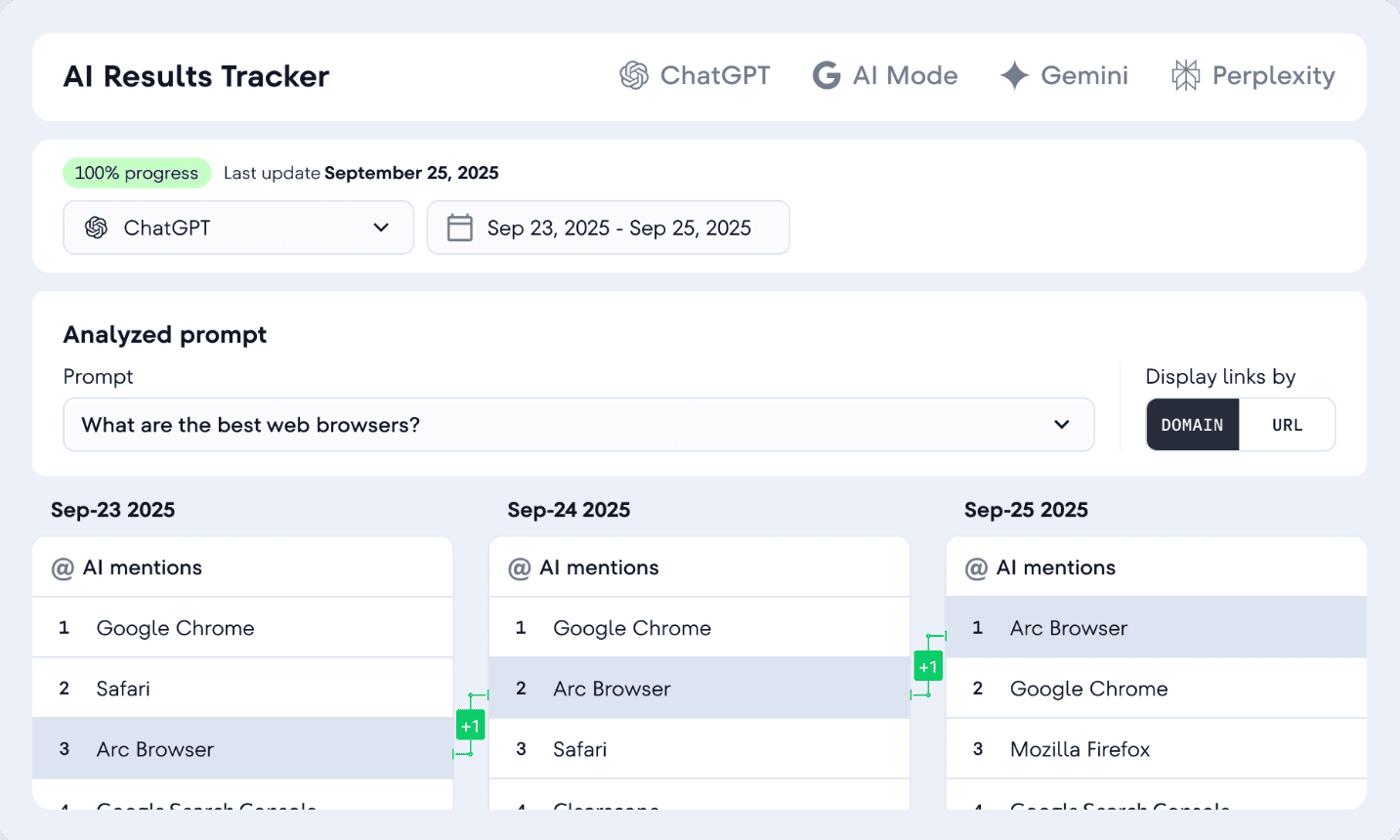
SE Ranking is an AI SEO platform built around the operational needs of businesses and marketing agencies. It lets you run each client’s SEO and AI search campaign as a separate project from one account.
Key features:
- Tracks website changes, including updated metadata, headings, links, and page content.
- Identifies paid placements in ChatGPT and Google AI Mode, separating ads from organic AI mentions.
- Monitors Google Business Profiles, local listings, and customer reviews through Local Marketing.
- Generates SEO audit reports for potential clients using the Agency Pack's Lead Generator.
- Creates scheduled SEO reports with agency branding and client-specific performance data.
Pricing: Core costs $129 monthly. Growth costs $279. AI Search add-ons start at $89 for 200 checks.
Pros:
- Offers a 14-day free trial without requiring credit card details.
- Supports importing SEO projects and historical ranking data from Semrush, Ahrefs, and other platforms.
- Provides free SEO training through SE Ranking Academy and its learning resources, making onboarding easier.
Cons:
- Certain advanced tools and features, such as the AI search add-on and Agency pack, are separate and expensive packages
- Allows AI visibility tracking only across Google AI Overviews, ChatGPT Search, Gemini, and Perplexity
Best suited for:
- Local SEO specialists and regional marketing agencies serving hospitality, healthcare, and home-service businesses.
7. Writesonic
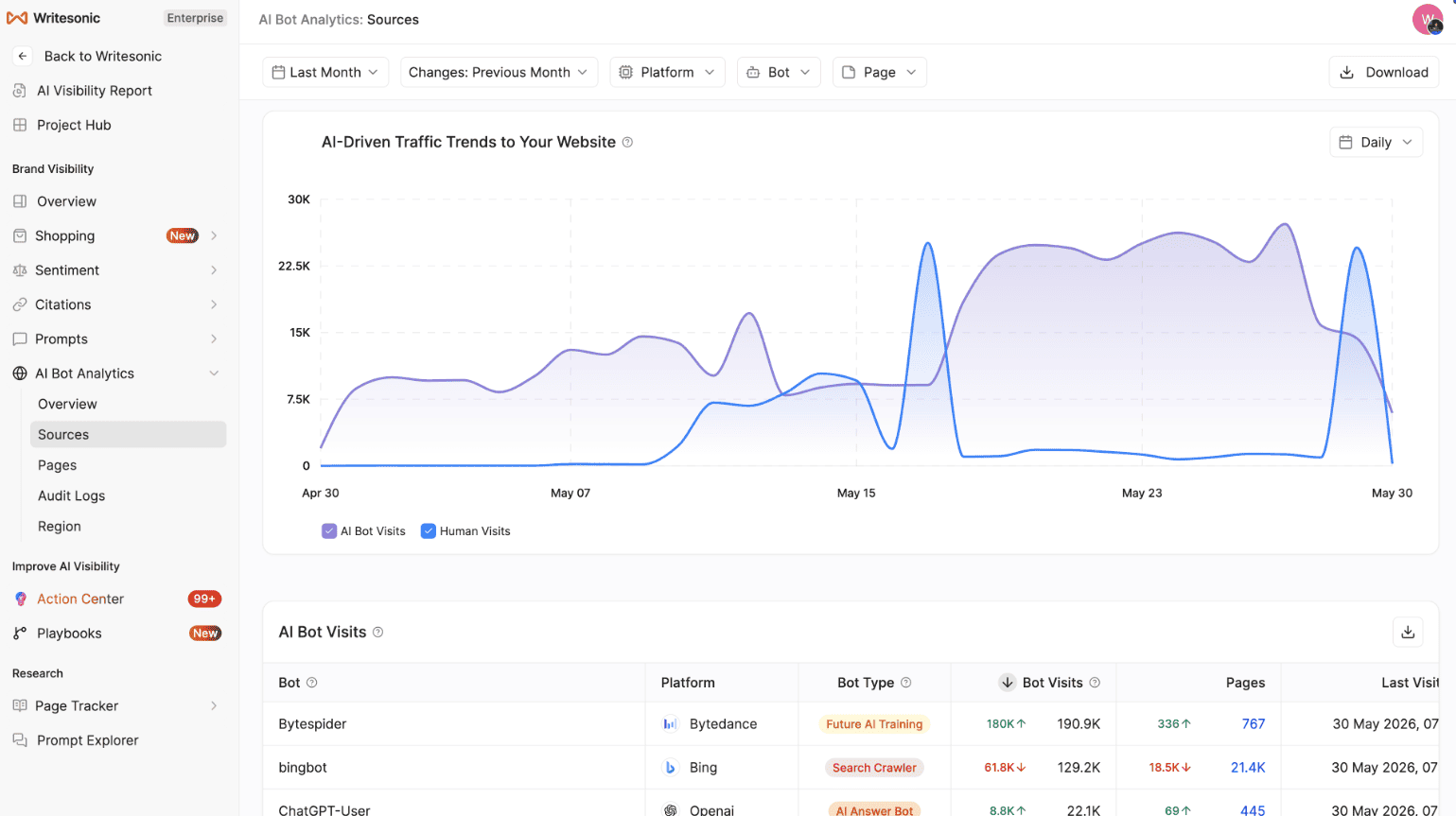
Writesonic is a generative AI SEO software platform that helps you write search-focused articles and tracks whether AI engines cite them.
Key features:
- Fact Check identifies incorrect AI claims about your brand and traces them to cited sources.
- Citation Decay detects when previously cited pages stop appearing in AI-generated answers.
- Social Citations tracks how YouTube, LinkedIn, and Reddit content appears in AI search results.
- AI Shopping monitors product visibility and placement in AI-powered shopping experiences.
- AI Search Ads identifies advertising placements across ChatGPT and Google AI search.
Pricing: Starter costs $99 monthly. Basic starts at $249 per month, and Growth costs $499.
Pros:
- Offers automatic website fixes even on the entry-level paid plan.
- Allows users to upload their own data to guide AI-generated content.
- Offers a free trial without requiring credit card details.
Cons:
- Self-service plans track only ChatGPT, Gemini, and Google AI Overviews.
- Starter supports just one user, one project, and one market.
- Full Action Center access requires Enterprise, while Growth offers limited actions.
Best suited for:
Growth-stage startups and B2B marketing teams
8. Ubersuggest
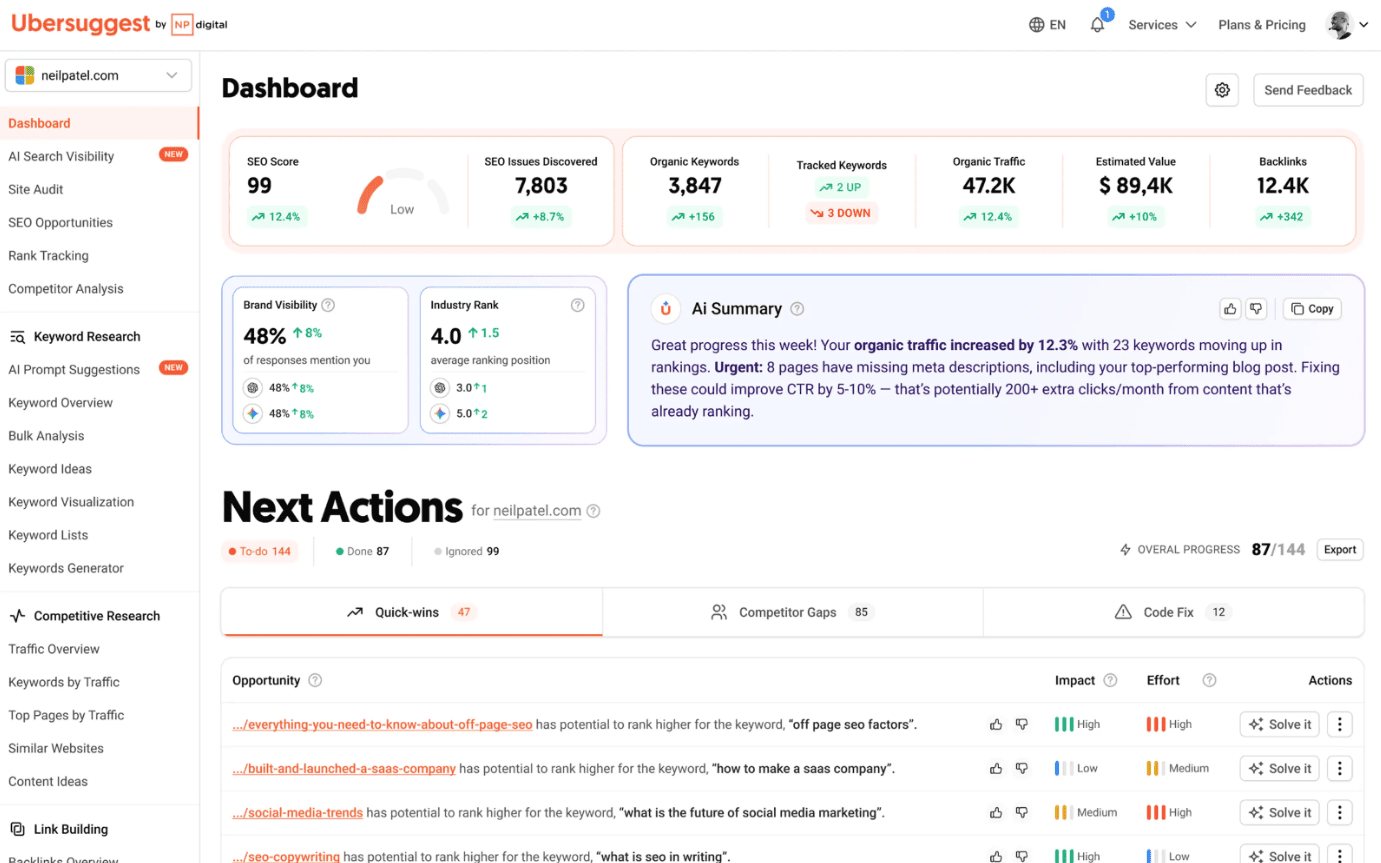
Ubersuggest is Neil Patel’s SEO tool and one of the simpler AI SEO tools for small business owners. It covers keyword research, site audits, and basic AI visibility at a low monthly price.
Key features:
- Displays keyword metrics and SEO insights directly in Google search results through its Chrome extension.
- Prioritizes website improvement opportunities based on potential traffic gains and implementation difficulty.
- Finds popular articles for a topic using content performance and social sharing data.
- Generates AI prompt ideas from keywords to explore questions people ask AI assistants.
Pricing: Individual starts at $29 monthly. Business costs $49, while Enterprise costs $99. Lifetime options are available.
Pros:
- Offers lifetime subscriptions for users who prefer avoiding recurring monthly payments.
Cons:
- AI visibility features provide limited GEO guidance
- Content suggestions can feel generic
- SEO data is less extensive than Ahrefs or Semrush
Best suited for:
- Freelancers and small businesses learning core SEO workflows
9. Frase
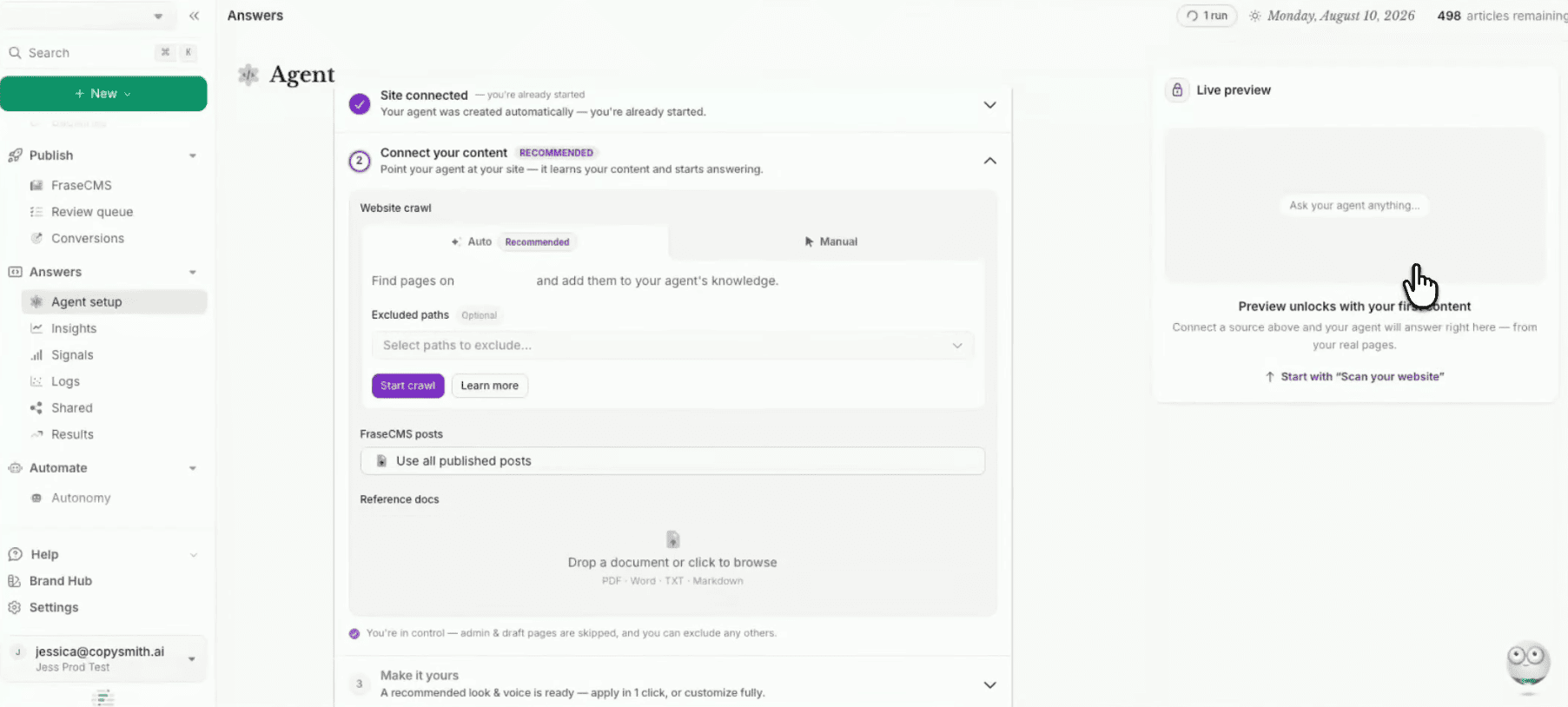
Frase is an AI-based SEO tool for content teams. It finds the questions searchers ask about a topic and builds briefs and drafts that answer them.
Key features:
- Content Guard detects declining Google rankings and drafts updates for affected pages.
- Frase Answers collects visitors' questions through a conversational website widget.
- Content Atomization turns existing articles into posts and snippets for other marketing channels.
- FraseCMS hosts articles with structured data and llms.txt support.
- AI Visibility sends daily alerts when brand appearances in AI-generated answers change.
Pricing: Starter costs $49 monthly or $39 annually. Professional costs $129, while Scale costs $299. A 7-day trial is available.
Pros:
- Includes API access on every plan
- Keeps pay-as-you-go usage optional
- Provides free FraseCMS hosting for 100,000 monthly page views
Cons:
- Some users report formatting issues when copying content from Google Docs.
- The interface can feel slow, with occasional difficulties navigating editing tools.
- Content suggestions can be repetitive or less relevant to specialized industries.
- Some longtime customers report dissatisfaction with lifetime deals and the transition to newer subscription plans.
Best suited for:
- Independent publishers, small editorial teams, and businesses maintaining large libraries of evergreen articles.
10. Search Atlas
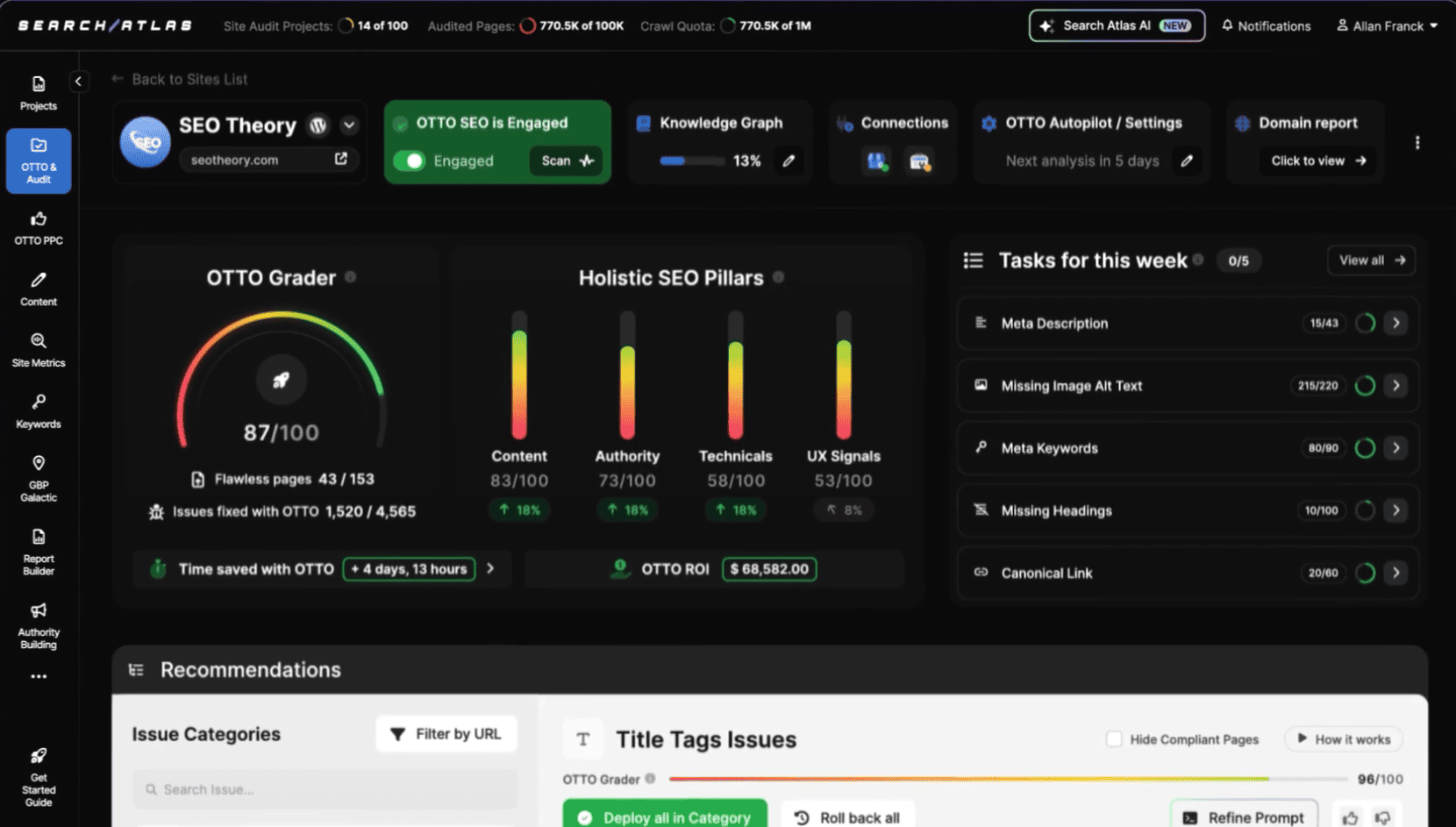
Search Atlas takes an execution-focused approach to AI SEO automation. Instead of requiring marketers to complete every task manually, it uses AI agents to carry out SEO and marketing activities such as website improvements, authority building, and local search management.
Key features:
- OTTO SEO deploys metadata, schema, and internal linking changes through a website pixel.
- Atlas Brain coordinates specialized AI agents using customizable marketing playbooks.
- Link Laboratory lets users select publisher websites and purchase editorial backlink placements.
- Digital PR tools create and distribute press releases across selected news networks.
- Local SEO Heatmaps display Google Business Profile rankings across specific geographic locations.
Pricing: Starter costs $99 monthly. Growth costs $199. Pro costs $399. Every standard plan includes a seven-day trial.
Pros:
- Supports multiple marketing channels, reducing the need to switch between separate platforms.
- Allows users to review proposed changes before deployment and control automation settings.
Cons:
- The extensive interface has a steep learning curve
- LLM visibility projects and queries start at $199/month, which is expensive compared to other SEO+GEO tools in this blog.
Best suited for:
Marketing agencies, in-house marketing teams, and ecommerce or multi-location brands
11. NEURONwriter
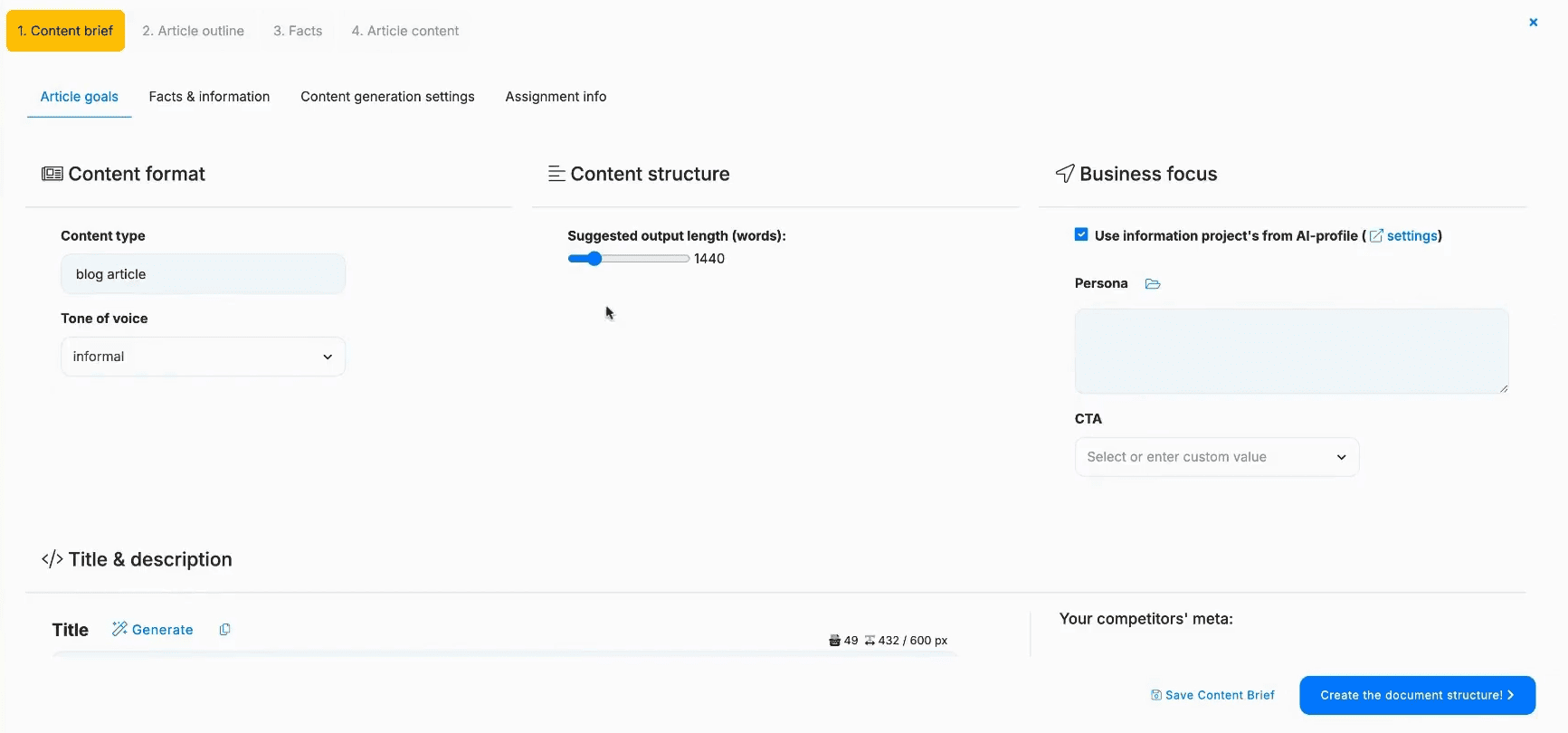
NEURONwriter is an AI-powered SEO writing tool that gives writers control over their content creation process. It supports different AI models, reusable writing templates, and flexible publishing options for managing articles.
Key features:
- AI Score evaluates content structure, clarity, and topic coverage for AI search.
- Supports personal OpenAI and Anthropic API keys for greater control over AI generation costs.
- AI Image Generation creates illustrations and graphics using text descriptions.
- WordPress Chrome extension supports editing and scheduling articles directly from the platform.
Pricing: Bronze costs $23 monthly. There are other plans ranging from $45 to $117 per month. Every plan includes standard AI visibility. A seven-day Gold trial is available.
Pros:
- Offers some of the most affordable plans compared to other AI SEO platforms covered in this blog
- Suggests relevant internal links between existing pages
- Content calendars support planning across multiple projects
Cons:
- AI-generated drafts require editing and fact-checking
- The editor can feel slow during larger workflows
- Monthly analyses and AI credits restrict publishing volume
Best suited for:
- Freelance copywriters, small blogging teams, and boutique content marketing agencies.
Best Free AI SEO Tools
Let’s also look at some free tools that can help you with both AI visibility improvement and SEO optimization.
- Siftly: Tracks 10 prompts weekly across ChatGPT and Google AI Overviews on its free plan, along with weekly data refreshes.
- Qwairy: Provides 120 free credits for tracking brand mentions, citations, sources, and competitors across major AI engines.
- Beacon: Its free-forever plan includes 10 tracked AI prompts, GEO tracking, keyword research, and SEO audits.
Add a free AI visibility check to your SEO stack
Rankings tell you where you sit on Google. This shows whether ChatGPT names you for five buyer questions, who it picks instead, and which pages it cites. Free, no signup.
Get your free AI Visibility ReportHow to Select the Best AI SEO Tool?
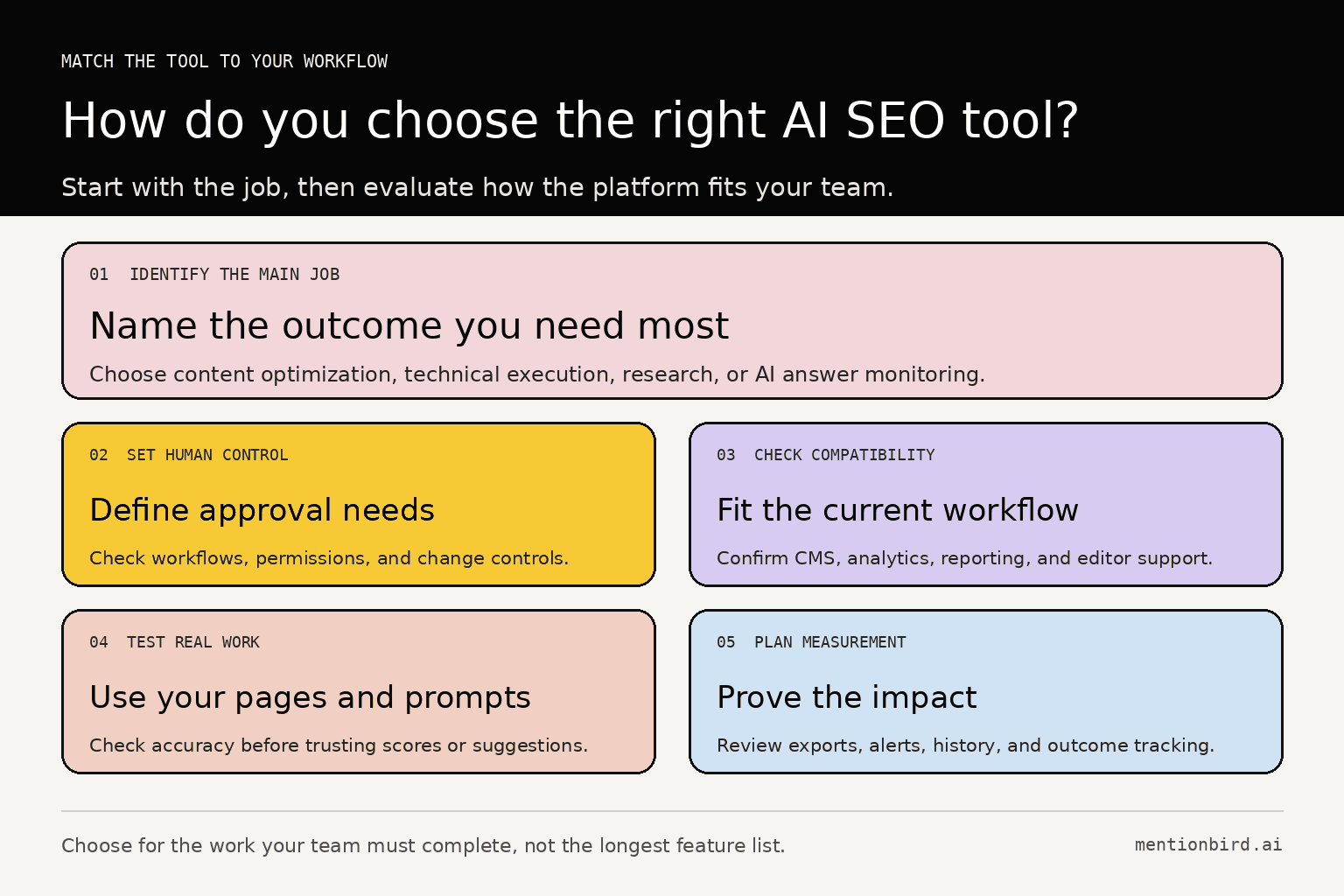
The best AI SEO software for your business depends on your existing resources, marketing goals, and the work you want to simplify. Consider these factors before making a decision:
- Review your existing tools: Identify missing capabilities before paying for another platform with similar features.
- Match your business priorities: Choose between growing organic traffic, earning AI citations, creating content, or automating SEO tasks.
- Consider your team's expertise: Advanced platforms may require SEO specialists, while simpler tools suit marketers with limited technical knowledge.
- Evaluate long-term value: Consider whether the platform can support new websites, campaigns, and changing business requirements.
- Assess the actual workload: Choose tools that reduce manual effort rather than introduce more dashboards and tasks.
Also read:
How to Use AI SEO Tools Effectively
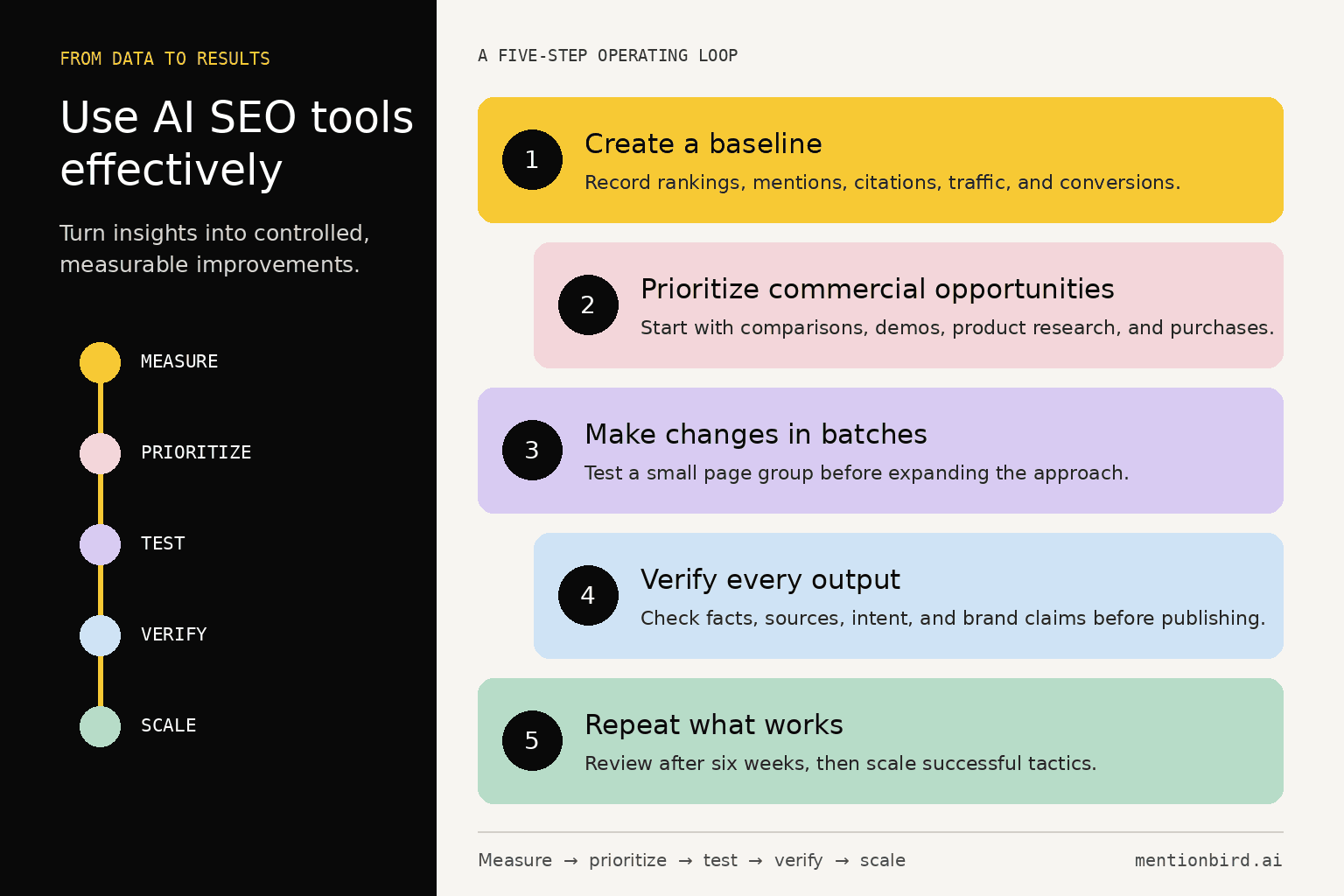
AI SEO tools work best when teams turn their findings into controlled, measurable improvements.
- Prioritize commercial opportunities: Address prompts and pages connected to comparisons, demos, product research, or purchases first.
- Analyze competitor visibility: Identify relevant AI prompts where competing brands appear but yours doesn't. Use these gaps to plan content improvements.
- Make changes in batches: Update a small group of pages, then compare results before expanding the approach.
- Verify every output: Check facts, sources, search intent, and brand claims before publishing AI content or technical updates.
- Repeat what works: Review results after six weeks and apply successful tactics across related pages and prompts.
Are AI SEO Tools Similar to AEO Tools?
Yes. AI SEO and AEO tools overlap because both improve how algorithms discover, understand, and evaluate website content. They rely on crawlable pages, strong site architecture, structured data, relevant content, and trusted sources.
However, vendors use these labels differently, and many platforms support both workflows. Their features may span keyword research, audits, content optimization, AI visibility tracking, citation analysis, and actionable recommendations. Strong traditional SEO foundations can also improve visibility in AI-generated answers.
Therefore, this guide includes MentionBird and Profound alongside SEO platforms with AI features. Both help brands measure and improve their presence across answer engines.
Conclusion
Any good AI SEO platform can help you improve research, content, technical work, and visibility across Google SERPs and LLM answers.
Choose a tool that fits your primary goal, then measure its impact before expanding your workflow.
Frequently Asked Questions
- Which are the best SEO tools for ChatGPT specifically?
MentionBird is a good option, as it tracks your brand’s share of voice across ChatGPT answers, which of your website pages ChatGPT cites, and what to do to earn more mentions. Profound is also a good option for its marketing automation features.
- Can you name the best AI SEO tools?
It depends on the job you are buying for. MentionBird is the strongest pick for getting practical, clear AEO recommendations to fill gaps for all the prompts you currently don’t rank for. Semrush One suits teams running a full SEO program alongside AI search data. Surfer is the better choice if on-page content is your bottleneck.
- Can AI SEO tools guarantee higher rankings?
No. AI SEO optimization tools can find problems and suggest changes. Rankings still depend on content quality, authority, technical health, competition, and search engine updates.
- Do I need separate tools for SEO and AI visibility?
Not always. Some suites cover both. However, focused AI search visibility tools often provide deeper prompt data, citation analysis, and recommendations than broad SEO platforms.
- How long before AI SEO tools show results?
Four to six weeks, usually. Models refresh their sources on their own schedule, so a page you fix today may not surface in an answer for a month. Judge the trend, not any single day.
- Do AI SEO tools hurt rankings?
Using a reliable AI SEO software app will not. Publishing its raw output might. Google penalizes thin, spammy, unedited content regardless of who wrote it, so treat generated drafts as first drafts and add real expertise before publishing any edit across your website.
- Is SEO dead or evolving in 2026?
SEO is evolving, not dying. Traditional SEO remains important, but businesses must also optimize content for AI search engines like ChatGPT and Google AI Overviews.
- Which AI SEO agency is the best?
The best agency depends on your industry and goals. Check MentionBird's ChatGPT agency rankings to compare agencies based on their AI recommendations and visibility.
- Can AI do SEO optimization?
Yes. AI can support keyword research, content optimization, technical audits, and automated fixes. However, human review remains essential for accuracy, content quality, and strategic decisions.
- Which are the best AI-powered SEO tools?
Some notable AI-powered SEO tools include Clearscope, MarketMuse, seoClarity, and Scalenut. They support content optimization, topical research, technical SEO, and AI-assisted content creation.

Get your winning plan for both AEO and SEO
First month $19 with code TRY19, then $79/mo. Cancel anytime.