
Deep Research
Deep Research is a mode in AI assistants such as ChatGPT, Gemini, and Perplexity that spends several minutes reading dozens of sources and writes a detailed report with citations, rather than a quick answer.
- Deep Research plans an approach, reads dozens of sources, and writes a structured report with citations, usually over several minutes.
- Gemini, ChatGPT, Perplexity, and Claude all offer a version of it, with plan limits that vary and change often.
- Compared with a regular answer, it takes longer, reads far more sources, and produces a document rather than a reply.
- It is especially common in business buying, where reports comparing vendors are often shared across a buying team.
- Detailed public facts, consistent information, open documentation, and coverage in industry sources improve the chances of appearing in reports.
How Deep Research works
A regular AI answer runs a few searches and replies in seconds. Deep Research takes a longer route. It plans an approach to the question, runs many searches, reads dozens of sources, and spends several minutes writing a structured report with citations throughout.
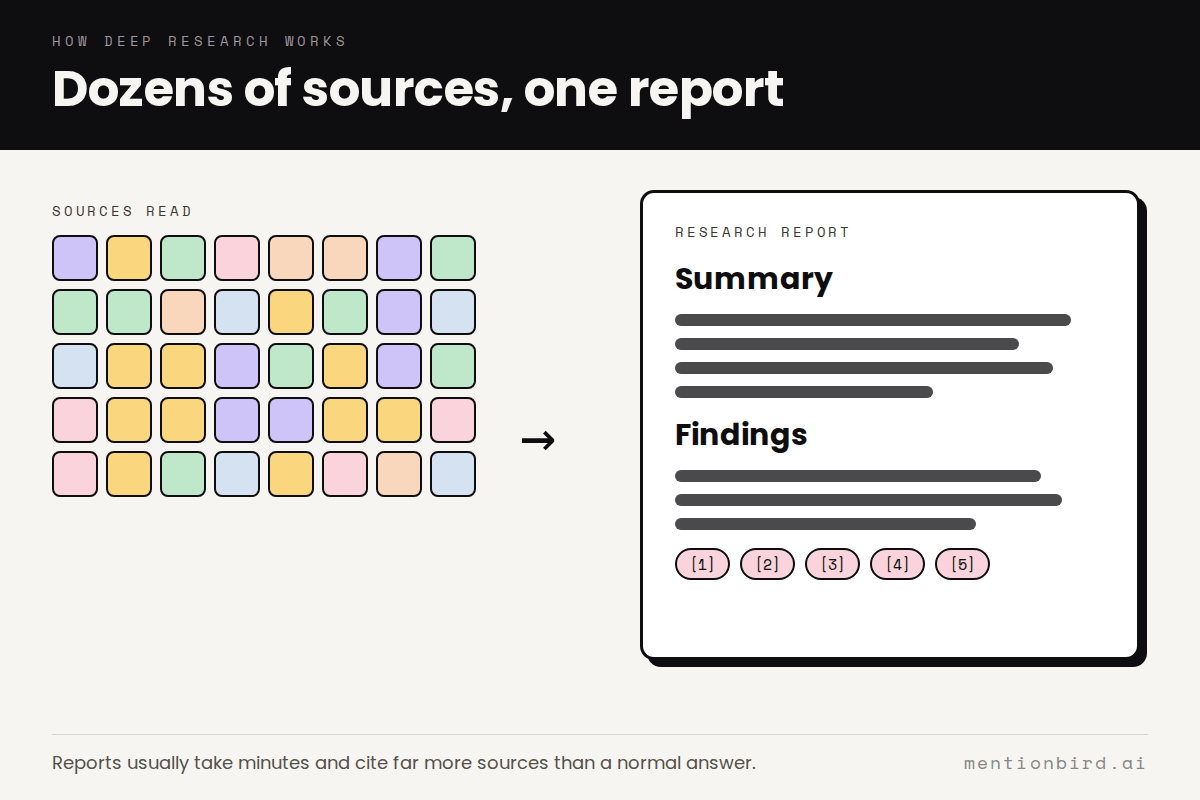
The result reads less like a chat reply and more like an analyst's brief, with sections, comparisons, and a list of sources.
Where Deep Research is available
Several major assistants now offer a version of it. Google introduced Deep Research in Gemini in December 2024, and OpenAI and Perplexity followed with their own versions in February 2025. Claude offers a similar Research mode. Plan limits and features vary by platform and tend to change often.
Deep Research vs a regular AI answer
- Time: A regular answer arrives in seconds, while a Deep Research report usually takes several minutes.
- Sources: A regular answer typically draws on a handful of pages, while a report may read dozens.
- Output: A regular answer is a reply, while a report is a structured document with sections and citations.
- Typical use: Regular answers suit quick questions, while reports suit research like comparing vendors or exploring a market.
Why Deep Research matters for brands
Deep Research is especially common in business buying. A buyer can ask for a full comparison of vendors in a category and receive a report that names options, weighs pricing and features, and links to the sources behind each claim. That report is often shared with colleagues, so it can shape a decision well beyond the person who ran it.
Because reports read so many pages, there are more chances to appear, and every page they draw on becomes an AI citation. The flip side is that thin or vague pages tend to lose out to sources that state the details plainly.
How to show up in Deep Research reports
- Publish the details buyers compare: Pricing, features, integrations, and limits on public pages give reports concrete facts to use.
- Keep facts consistent: Reports often cross check several sources, and conflicting details can lead to your brand being described inaccurately or left out.
- Make documentation public: Help centers and product docs that can be crawled often answer the detailed questions reports look into.
- Earn coverage in industry sources: Analyst notes, reviews, and trade publications are the kind of sources reports tend to read.
- Share original data: Research and benchmarks give reports something specific to cite.
Curious how AI answers questions about your category?
MentionBird tracks your buying prompts every day across the AI platforms in your plan, and shows where your brand appears. Starter covers ChatGPT and Gemini, Growth adds Perplexity and Claude, and Custom supports up to 20 platforms: ChatGPT, Gemini, Perplexity, Claude, Grok, Google AI Overviews, Microsoft Copilot, DeepSeek, Google AI Mode, Mistral Vibe, Qwen Chat, Meta AI, Kimi AI, You.com, Ask Brave, Alexa for Shopping, Doubao, ERNIE, Poe, and Duck.ai.
Start todayFAQs
1. Is Deep Research free?
Some platforms offer a limited number of Deep Research runs on free plans, with more available on paid plans. Limits change often.
2. How long does a Deep Research report take?
Usually several minutes, and sometimes longer for broad or complex questions.
3. Can Deep Research reports be wrong?
Yes. Reports can still misread sources or draw on outdated pages, so the citations are worth checking before acting on a report.
4. Can Deep Research read paywalled content?
Generally not. It mostly reads public pages, so information behind logins or paywalls is unlikely to appear in reports.
5. Do Deep Research visits show up in my analytics?
Sometimes. The pages it reads are fetched by AI bots, while people who click links inside a report arrive as referral visits.
See how AI describes your brand to buyers
First month $19 with code TRY19, then $79/mo. Cancel anytime.